

Showing posts with label genome. Show all posts

Universal Negatives and Random Mutations

“There is [still no] proof that all mutations are random.”
Universal Negatives and Random Mutations

Right in a sense, if only because no one can prove a universal negative.

However we do have proof:

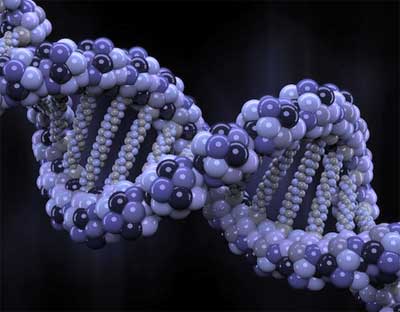
  1. That mutations take place and alter the genome, especially in non-essential and unused portions of the genome that do not code for proteins. Mutations collect in those areas of the genome very readily, which is the majority of the genome. In fact, less than five percent of the entire human genome codes for proteins, and thatʼs close to the same percentage of the genome that consists of endogenous retroviral DNA (which is foreign DNA from viruses that has implanted itself, hidden and insinuated itself into our human DNA over the eons). Mutations can also be observed directly every so often right after meiotic divisions of the sex cells. So, mutations are known to occur on a regular basis, and at the frequency that evolution requires in order to turn, say, a common ancestor of chimps and humans into both chimps and humans. In fact, the known calculated frequency of mutations in the human genome is more than what is required if evolution via mutations over time were true.

  2. There is proof that man and chimp are nearer each other genetically than either of them are to the other apes. Indeed, “new genetic evidence that lineages of chimps (currently Pan troglodytes) and humans (Homo sapiens) diverged so recently that chimps should be reclassed as Homo troglodytes. The move would make chimps full members of our genus Homo, along with Neanderthals, and all other human-like fossil species. “We humans appear as only slightly remodeled chimpanzee-like apes,” says the study…Within important sequence stretches of these functionally significant genes, humans and chimps share 99.4 percent identity. (Some previous DNA work remains controversial. It concentrated on genetic sequences that are not parts of genes and are less functionally important, said Goodman.)…” [from “Chimps Belong on Human Branch of Family Tree, Study Says” John Pickrell in England for National Geographic News May 20, 2003]

    One early estimate of the genetic distance between man and chimp was done in the 1970ʼs using the technique of pairing up the two halves of DNA strings from different species to see what percentage of the DNA stands would join together and what percentage did not. Humans and chimps were found to be no more dissimilar than sibling species of nearly identical fruit flies. Not much genetic distance there.

    And it logically follows that if you were to compare the genetic distance not between man and chimp, but between man and the Common Ancestor of man and chimp, the genetic distance is even less. I am guessing, but Denton may be raising that point in his new book, The Tree of Life, that he is currently writing.

  3. There is proof that at least 100 known species of Old World apes lived during the Miocene in Europe and Africa. And those species of primitive apes all differed from modern great ape species in that the primitive apes were all relatively nearer to modern day human skeletal anatomy than todayʼs great apes are. For instance, the primitive apes all had small hands, and had legs and arms the same length; while modern great apes all have large hands with long fingers, and their arms are longer than their legs. The primitive apes also had no simian shelf in their jaws, again like modern humans; while the modern great apes all have a simian shelf in their jaws, unlike modern humans.

  4. There is also proof of upright apes and early pre-hominids, hominids, and eventually the genus homo.

    The questions these four points of fact raise in my own mind are many. Perhaps I.D.erʼs ignore such questions, I canʼt speak for them, but here are the questions for me:

    1. Mutations happen regularly and at a rate that is not incompatible with the modern scientific theory of evolution. And also, there are unused portions of the genome, huge portions in fact, collecting mutations. In fact enough endogenous retroviruses have crept into the human genome over the millennia to rival the amount of functional protein-coding DNA that is used to construct a human being. Furthermore there are even remnants of the old centromeres in our human Chromosome #2, remnants of when that chromosome was once two separate chromosomes, each with their own centromere, as it is today in all the great ape species. Comparison of the Human and Great Ape Chromosomes as Evidence for Common Ancestry (I have additional info on this if you need it).

      Question: It would seem that a designer could have designed a lot cleaner genome, or at least taken some of the old viral DNA out of our genome when adding the occasional new mutation. He could have removed some of the remnants of the extra centromere found in human chromosome #2.

      In other words, there could be more signs of design instead of just accumulation of unused portions, instead of evidence of a sloppy fusion of two chromosomes into one.

    2. The genetic distance between chimp and human is quite small, even smaller between chimp/human, and their common ancestor. Itʼs a genetic distance comparable to sibling species of fruit flies.

      Question: Does it really require a miracle to explain how such a distance might be bridged?

    3. & 4. There were pre-monkeys before there were monkey, and there were many species of monkey before the first primitive apes showed up, and many species of primitive apes before the first hominids showed up, and different species of homo, before homo sapiens showed up.

      Question: There were ages upon ages of monkeys and then ages upon ages of apes. Were any of them required before arriving at hominids, and finally of those hominids, one branch of them arriving at man? It may be “design” of a sort overall, but it does not appear very “direct” to create so many bushes upon bushes of creatures and then only have a few ultimately survive on the ends of each bush.

Intelligent Design, Chromosomes and Genes

TS: Offer your scientific theory of Intelligent Design before the scientific community (not before school children) and weʼll give it a hearing. Or, admit that you and your whole project and your silly syllogisms are deeply dishonest.
Intelligent Design, Chromosomes and Genes

Edward: I appreciate the attempts at sarcasm and humor. My own view however is that there is plenty of evidence of things in nature that one might not expect a designer to design. I am not speaking of the argument from icky things, though there are enough of those to be sure, including the Designer not creating every newborn with equal genetic health, but sometimes with the nastiest of diseases, or even allowing something like 50-80% of all fertilized eggs in humans to simply die.

I am speaking firstly, about extinctions. Extinctions of species of early monkeys, early primates, early apes, even species of early humans. Even massive extinctions, of which there appears to have been six or seven, when the Designer simply cleared the earth of huge swaths of his creations that he supposedly took such care designing, just wiping them off the face of the earth en masse.

Secondly, the extinct critters often were less suited than modern day ones to their niches, or were halfway critters. Early flying reptiles were not well suited for flight in many ways that can be distinctly pointed out. The designer, if there was one, often took baby steps designing things, and left behind the many less suited species that became extinct.

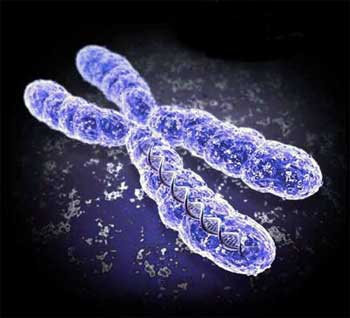
On the genetic front, the designer also left behind evidence of genetic changes, like the human chromosome #2, that features a remnant second centromere and reversed telomeric region (inside the chromosome instead of at itʼs end where teleomeric regions are normally found), that together provide loud and clear evidence that a fusion of two primate chromosomes took place in the past. For instance, the chimp and human chromosomes all have distinctive bands that line up, chromosome for chromosome, but the chimp has one extra chromosome, while human chromosome #2 contains visible evidence of being the result of two chromosomes (from a common ancestor of chimp and human) that fused at some time in the past, because the elongated human chromosome has the remnants of such a fusion inside it, but also features the same banding pattern as found on the two chimp chromosomes that it resembles, when the two chimp chromosomes are placed alongside the longer human chromosome #2).

Thirdly, thereʼs the evidence of genetic differences (not just recombination, but different genes) between individual human beings. Most I.D.ists wouldnʼt consider such minor differences between individual human genomes as being due to design, but would probably be open to explaining them as a by-product of mutations, because everyone knows DNA never copies itself exactly from generation to generation. Differences accumulate.

Then thereʼs the larger genetic differences between chimps and humans, our closest living relatives. Again, mutations are likely to leave behind tell tale signs, like when chromosomes fuse and leave behind sloppy visible remnants inside them that they used to be two chromosomes where there is now a single chromosome. Mutations go hand in hand with that kind of evidence.

Then thereʼs the many species on earth that are similar, sometimes closely similar, like different species of zebra fish, but it was recently discovered that one such species of zebra fish has about twice as large a genome as another. The one with twice as large a genome also has many duplicate genes and near duplicates. It appears that the whole genome mutated and doubled in size. And then some of the duplicated genes got lost, while others mutated into near duplicates, some of them being genes that function. Hence new functional genes arose. But does one species that seems so close to the other, really need twice as much genetic material and some new genes? If itʼs a mutation, itʼs a humdinger, whole genome duplication, and it didnʼt kill the species, but added information. But if itʼs a designer that did the whole genome duplication, then why choose to duplicate an entire genome in two such closely related species? The species with the single genome is still getting along fine with just that. The zebra fish remain quite similar to each other. (It happens in plants too, whole genome duplication, and the species still go on, and even look like each other, though the duplicated genomes can lead to new genes that affect hardiness or size).

Apparently there is quite a lot that can happen to a genome and yet the species continues onward. Some species of insects that are closely related have undergone some substantial genetic changes and differences that are often only seen in a single closely related member. Yet there is no apparent reason why a designer would institute such changes since there are plenty of closely related species without such genetic changes that are doing quite well. I mean why is only a single species of bedbug able to stab its penis traumatically into the abdomen of another male of the species that has its own penis stabbed traumatically into the abdomen of a female, so that the male who is stab raping the other male, gets his seminal fluid into the female via the middle male? Itʼs all due apparently to nature finding ways around the vaginal plug of insects. But only one species of bedbug has males that stab rape other males.

Does I.D. make any predictions as to when genetic changes are mutations saved via natural selection and when they are not?

Thereʼs also the weird species that evolve only on islands in the ocean. The first animals of whatever species that reached those islands first, as soon after the islands formed far offshore, is predicted by evolution to diversify and fill unexpected niches, because there were no species there already ensconced and filling each niche. Thus such islands feature unusual species. Evolution via mutation? Hawaii is a good case in point, since the islands there are young, the oldest being only about five million years old. But thereʼs some unusual species of fruit flies, animals, and plants there with unusual behaviors.

The evidence of arms races in nature is also well attested. Changes of one species influence the other, especially in cases of predator and prey species. Even humans, being massive killers of species from bacterial germs to mosquitoes, has affected their evolution. The bacteria evolved resistance to antibiotics, while the insects evolved resistance to pesticides. Interestingly, thereʼs a wide variety of ways that a bacterium or insect can evolve resistance to such things. Sometimes a gene is omitted, and that protects them, sometimes a gene is duplicated, and that protects them. Closely related species may evolve completely different ways of combating the antibiotic or pesticide.

Nature appears flexible, intrinsically so. So much so, that it appears to me evolution is no more impossible than say, the ability of stars to produce every element in the periodic table from simply hydrogen atoms that continue fusing together into heavier and heavier atoms inside each star.

Also, there are quite a few Christian evolutionists out there who are not jumping aboard the I.D. bandwagon for the reasons given above.