

Showing posts with label evolution. Show all posts

Irreducible match of orchid and moth?

Irreducible match of orchid and moth?

From a book by Darwin on orchids I had heard contained a passage about a prediction Darwin had made based on the length of the “nectary” of a species of orchid in Madagascar that was ten to eleven inches long. Quite a long “nectary,” which raised the question, what species could reach that far inside the orchid to enjoy its nectar and pass along the orchidʼs pollen to the next orchid? Darwin reasoned that “in Madagascar there must be moths with probosces capable of extension to a length of between ten and eleven inches!” No such moth species was known at the time, and they were only discovered years after Darwinʼs death. The length of the nectary appears to have evolved along with the length of the tongue of a particular moth species (perhaps other moth species were also evolving longer tongues at first, but only this species was able to keep up with the lengthening of the orchid?).

Was a designer playing games in designing this oddly irreducible match between this species of orchid and this species of long-tongued moth? Or did this irreducible match come about by virtue of the moths with the longest tongues surviving to continually lick up a source of nectar available only to them? Any strong opinions either way?
Best, Ed

The writings of Charles Darwin on the web
by John van Wyhe Ph.D.

Darwin, On the various contrivances by which British and foreign orchids are fertilised. London, John Murray, 1862.

Chapter V.

I fear that the reader will be wearied, but I must say a few words on the Angræcum sesquipedale, of which the large six-rayed flowers, like stars formed of snow-white wax, have excited the admiration of travellers in Madagascar. A whip-like green nectary of astonishing length hangs down beneath the labellum. In several flowers sent me by Mr. Bateman I found the nectaries eleven and a half inches long, with only the lower

[page] 198

inch and a half filled with very sweet nectar. What can be the use, it may be asked, of a nectary of such disproportional length? We shall, I think, see that the fertilization of the plant depends on this length and on nectar being contained only within the lower and attenuated extremity. It is, however, surprising that any insect should be able to reach the nectar: our English sphinxes have probosces as long as their bodies: but in Madagascar there must be moths with probosces capable of extension to a length of between ten and eleven inches!

[…]

If the Angræcum in its native forests secretes more nectar than did the vigorous plants sent me by Mr. Bateman, so that the nectary becomes filled, small moths might obtain their share, but they would not benefit the plant. The pollinia would not be withdrawn until some huge moth, with a wonderfully long proboscis, tried to drain the last drop. If such great moths were to become extinct in Madagascar, assuredly the Angræcum would become extinct. On the other

[page] 202

hand, as the nectar, at least in the lower part of the nectary, is stored safe from depredation by other insects, the extinction of the Angræcum would probably be a serious loss to these moths. We can thus partially understand how the astonishing length of the nectary may have been acquired by successive modifications. As certain moths of Madagascar became larger through natural selection in relation to their general conditions of life, either in the larval or mature state, or as the proboscis alone was lengthened to obtain honey from the Angræcum and other deep tubular flowers, those individual plants of the Angræcum which had the longest nectaries (and the nectary varies much in length in some Orchids), and which, consequently, compelled the moths to insert their probosces up to the very base, would be fertilized. These plants would yield most seed, and the seedlings would generally inherit longer nectaries; and so it would be in successive generations of the plant and moth. Thus it would appear that there has been a race in gaining length between the nectary of the Angræcum and the proboscis

[page] 203

of certain moths; but the Angræcum has triumphed, for it flourishes and abounds in the forests of Madagascar, and still troubles each moth to insert its proboscis as far as possible in order to drain the last drop of nectar.

I am familiar with this puzzling case. But, try to write out a specific detailed Neo-Darwinian genetic sequence for it.

Me? I canʼt even write out a genetic sequence to make Cambellʼs soup. Darwin knew there were moths with longer tongues than most other species of orchid pollinators [like butterflies and bees and flies] and those moth species pollinated orchids with longer nectaries than most. Darwin assumed in this extraordinary case it was a moth with a tongue ten to eleven inches long getting to the nectar. He was right.

Do I know why the orchidʼs nectary evolved to such a length, or why the mothʼs tongue continued evolving to such a length to reach the base of the nectary? Perhaps because as the nectary grew longer the nectar became the sole property of whomeverʼs tongue could reach it, and thus a nitch for food opened up that no other creatures could reach, ensuring that whomever reached that niche could have all the spoils to themselves, a rich prize. And only those whose tongues could reach it, continued to reach it. While the shorter tongued cousins of the long-tongued moths settled for more hotly contested shorter nectaries, or grew extinct.

Philosophe, If you are out of your depth, perhaps you will accept my suggestion that no one can describe the genetic sequence, which at best would only be a series of guesses.

What is a philosophe? Someone from Voltaireʼs day? And what did it used to mean to call someone “Ms. Philosophe?” (Is Ms. an abbreviation of “Monsieur?”)

I agree with you that I am out of my depth. Who isnʼt “out of their depth” at this point and with our limited knowledge? I bet that moth and its near cousins in Madagascar are no where near having their genomes elucidated and compared and evolutionists are no where near understanding how everything functions and changes in such species.

For the rest, you seem to be describing a directed evolutionary theory, not evolution with chance alteration of the genome, a path I am confident you do not want to follow. It did not require much ingenuity to propose that such a flower would require an insect with a long tongue, or one small enough to make the trek by foot.

I thought about the question the same way, and thought why not a really small insect like a teeny beetle creeping down that ten to eleven inch long nectary for the nectar? Maybe because a single moth with a long tongue made more sense based on the cousin species of moths that already pollinate cousin species of that species of orchid in Madegascar, and Darwin assumed that evolution works with whatʼs already there?

Perhaps you might like to try your hand at writing some scenarios for the separate development of the human sex organs. You might even make the explanation amusing, perhaps leading to a Hollywood contract.

Wow, what a challenge! And a Hollywood contract to boot! But didnʼt Woody Allen already do the movie version of Everything You Ever Wanted To Know About Sex But Were Afraid To Ask? Seriously, Lynn Marguilis has written on the evolution of sex, though I donʼt know if sheʼs talked much about the evolution of human sex organs. From what little I know it does appear that in the womb early on we are all “female” moreso than “male,” relatively speaking. The gonads remain relatively in place for females while the male of the species has his gonads descend via two openings in the lower abdomen, and the tubules that lead from his gonads to his urethra have to grow longer since they are stretched up and around the tubules leading from his kidneys to his bladder (do I have that right?). The male prostate is another confusing matter, and doesnʼt appear to function very well where it is, causing difficulties with urination, especially as we age. (Speaking of difficulties as we age, whatʼs with “wisdom teeth” anyway?) As you can see Iʼm out of my depth in this matter as well. But are I.D.ers more in their depth concerning such subjects?

Daring scientists to explain one thing and then another thing, first the moth and orchid, then the evolution of sexual organs, including all the environmental/sexual/embryonic selective pressures and the kind and order of genomic mutations that occured over periods of thousands to millions of years, seems quite a task to demand of anyone.

Knowing that such matters have not been explained, I.D.erʼs jump in and explain it their way, by saying “it was a Designer!” I.D. class in college is going to be relatively short if most explanations come down to “Thatʼs just the Designer doing his thing, donʼt ask him how! That would be like trying to peek in Godʼs closet and thereʼs no point to that, since we already know itʼs I.D.” (Less Christian instructors will add that the Designer might also be aliens or time travelers.)

It does not appear to me that the I.D. explanation will take science any where, though it will doubtlessly absorb the minds of children with unquestioning reverence of some sort, toward either God, aliens or time travellers.

Still, I must add that there are also Darwinian Christian evolutionists who have reverence for God. Todayʼs prime example might be biologist Kenneth Miller who continues to debate with I.D.ers head to head.
Another such Christian appears to be Howard Van Till who refuses to align himself with the I.D. movement. Around the turn of the century there were others. See Darwinʼs Forgotten Defenders: The Encounter Between Evangelical Theology and Evolutionary Thought by David N. Livingstone. They appear to agree that perhaps a creation that required constant miraculous adjustments over zillions of years wasnʼt such a great reflection on the creator after all. But if creatures evolved naturally and death and change were part of natural processes, as natural as new stars being formed and new elements being formed from simpler elements inside stars, then the Creator was all the more impressive in having been able to set such things up right from the beginning. I mean, itʼs one thing to have to keep pulling rabbits out your hat every day or century or year, but to make human beings out of seventeen-billion-year-old hydrogen, well, thatʼs even more impressive than making a human being out of a single cell in nine months. Itʼs quite a trick, makes the constant dipping into the magic hat look repetitive, tiresome. And then to also produce creatures curious enough to study and rediscover the whole natural process and follow the clues backward, why thatʼs quite an inspiration to enhance curiosity. Can I.D. truly compare with that?

“How I hate the man who talks about the ‘brute creation’ with an ugly emphasis on brute…As for me, I am proud of my close kinship with other animals. I take a jealous pride in my Simian ancestry. I like to think that I was once a magnificent hairy fellow living in the trees, and that my frame has come down through geological time via sea jelly and worms and Amphioxus, Fish, Amphibians, Reptiles, and Apes. Who would exchange these for the pallid couple in the Garden of Eden?”
W. N. P. Barbellion

“When the rationality of the hross tempted you to think of it as a man…it became abominable — a man seven feet high, with a snaky body, covered, face and all, with thick black animal hair, and whiskered like a cat. But starting from the other end you had an animal with everything an animal ought to have…and added to all these, as though Paradise had never been lost…the charm of speech and reason. Nothing could be more disgusting than the one impression; nothing more delightful than the other. It all depended on the point of view.”
C. S. Lewis, Out Of The Silent Planet (a Christian science-fiction novel)

So what if Darwinism gives atheists solace. Are the atheists to be denied solace? Is God, the true God and creator, really as insecure as creationists assert, and always going around blaming people for if they donʼt believe in him and praise him for everything? Maybe heʼs not particularly proud of everything he sometimes gets praise for? Like miraculous football passes, or finding oneʼs eyeglasses? Maybe he leaves a lot up to us, and likewise up to nature, because letting things do their own thing is cooler than being a micro-manager? Maybe thatʼs Godʼs lesson to us. And likewise, maybe he doesnʼt take credit when things go wrong either, like extinctions or volcanoes. A cosmos that runs itself and evolves itself is gonna have things that run into one another, jury-rigging is expected. Maybe this is not the best of all possible worlds, just the best of all possible Self-Evolving worlds? Anyway, thatʼs my three hundred dollars and Two Cents on those matters.

I originally brought up the “irreducible long-tongued moth and long-nectary orchid” because it seemed pretty straightforward: Lengthening nectary, lengthening tongue over time. Seems like it could happen, knowing other moths with longish tongues and orchids with longish nectaries. Though a designer might just as well have left both the length of the tongue and the length of the orchidʼs nectary of average size. (Thereʼs only a single known species of bedbug that stab-rapes other males of the same species so as to inject them with his sperm that then finds its way through the stabbed maleʼs organ into the female he has stab-raped. Other species of bedbug only stab-rape the female in the abdomen and the males do not stab-rape each other. Likewise though the Bombardier beetle has a moving squirt appendage which can direct its heated chemicals. Other cousin species donʼt have the moving appendage, and they spray the chemicals outward and also on themselves. And beetles of that type already produce the hydroquinones that are used in other capacities in beetles and already have anatomical divisions that could be used as the two chambers to store those chemicals. And thereʼs only one bird species than can fly backwards. And thereʼs only one species of orchid and moth with such very long tongues and nectaries. So for every marvelously specialized species there appear to be lots of less highly specialized cousins sharing similar anatomies and physiologies.)

Was the lengthening of the orchid and the lengthening of the mothʼs tongue directed? Who knows? The antlers on the heads of Irish elk apparently grew to increasing lengths over time, and then no more Irish elk, they became extinct. (Because of the increasing size and length of their enormous antlers? I donʼt know. No one knows. But the antlers of the Irish elk do appear to be of an awkward length — jutting out so far to each side — that I imagine just swinging itʼs head quickly from one to side to the other might create enough momentum to strain itʼs neck — not a genuine hypothesis, just a joke based on the momentum of twisting and twirling objects, not to mention how such antlers could make it difficult to maneuver and double park in a forest full of trees). Perhaps that orchid with its long nectary might become extinct one day, having specialized itself into extinction, and if that moth is only especially attracted to that orchidʼs nectar it too could become extinct. There are tapir-like species in the fossil record that show up again later in time with increasingly elongated noses and a pair of elongated teeth until species with longer noses and longer front teeth appear and finally the first elephants with trunks and tusks appear. All thatʼs left today are the modern day tapir and the modern day elephant with those other species between them having gone extinct. If I.D. is life-giving and every one of its irreducible specializations demonstrates the farsighted perfection of an intelligent Designer, then why all the extinctions? Why are the earliest birds more like ancient reptiles than modern day birds? I mean if we found a hummingbird (the only one that can fly backwards) among the earliest birds, Iʼd be surprised, but we donʼt. We find birds with reptilian shaped triangular skulls with the same shaped individual skull bones as reptiles, and other features that label them as “birds in progress.” (How competent a Designer are we talking about?) And then once the progress has been achieved every early birds is wiped out. In this case the early bird did not catch the worm, it caught the grave. And this happens time and again. Mammal-like reptiles. Wiped out. All those mesyonchids with those weird shaped ear bones that resembled early whaleʼs ears, wiped out, not good enough I guess. (How competent a Designer are we talking about?) All those early Eocene whales, Ambulocetus, Rhodocetus, Basilosaurus, wiped out. Leaving only the species we see today, which still pop out embryonic hind legs in the womb where they are reabsorbed — or in some cases are not completely reabsorbed and we find a grown whale with bumps on its hind regions that contain (when x-rayed) a small femur, tibia, fibula and phalanges. (How competent a Designer are we talking about?)

Those are questions that I think are as valid as any others.

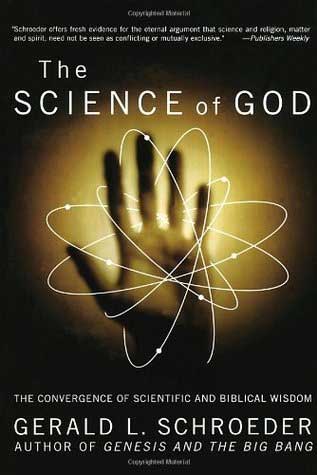
Review of The Science of God

In reference to: Testimony of Former Young Earth Creationist
That is a long and thoughtful intellectual trip, more effort expended than I had anticipated when Ed introduced himself to the group. On that occasion I sent to him (direct) a short note, but to date I have had no response.

Edward: “To date” (from the posting of my “intellectual journey” to your reply above) is less than 27 hours. Time must rush by at a furious pace for you. I can imagine you standing on your porch waiting for a reply the day after you mailed someone a letter (in ye old snail-mail days). Well, Iʼm here now, and you may ask me anything either in this forum or at my home or work email. My work email is ed.babinski@ and I may be contacted there 9:30AM-6:00PM M-F, but again, with work, there are no promises how soon I can reply.


I duplicate it for CED(below) and trust that he has completed all the research necessary for a reply.
Review of The Science of God

Edward: You “trust” that I have “completed all the research necessary for a reply.” Not very trustful it would seem. Thatʼs understandable. I hope that you have read as widely as I have, and examined each question in as many ways and from as many angles as I have, though I lack absolute “trust” that that is so. Itʼs not really a matter of trust at this early point of discussion, but of the trickiness inherent in all communication about complex, wide ranging, deeply believed, controversial subjects. On the topics of biological origins and the Bible much has been written, and I doubt both of us have read exactly the same articles, books. So, right from the start our ideas about certain subjects are not going to coincide. Perhaps agreement about many of those subjects will prove impossible without a fairly large number of books, articles, sources of information, that we both hold in common. Even so…the chorus goes, what “ELSE” have you read about this, that, and the other? (In the end, life is short and so is time for study. And for those two reasons I cannot imagine a “God” who condemns people to hell after they have been blown to and fro in this world for a mere couple of decades in a raging sea of ideas and emotions.)

I also think knowing more about you might aid future communications. (Your e-name isnʼt a cover for “Phil” Johnson is it?). What has your “intellectual journey” been like? I find most peopleʼs stories interesting, having read many testimonies of people who have entered and/or exited various religions/philosophies.


Dear Ed, Welcome.

Edward: Thanks! Happy to be here…Happy to be anywhere in fact.


You seem to have developed a strong preference for a position.

Edward: I have a strong preference for asking questions (and researching questions. My research projects led to a job at a university library — no I am not a full librarian). I have found various attempts at “concordance” questionable. I found the Bibleʼs creation story(s) questionable. And Iʼve found I.D. hypotheses also questionable. At the moment my question for I.D.ers is simply this, “If there is a Designer, what can we learn about their level of say, competency, by examining various aspects of nature and natureʼs history? A Divine Tinkerer perhaps?” Personally, I am open to theism, even a personal God, personal beings of light, etc. But I do not have any proof, mainly anecdotes, like NDEs. And the Bible no longer constitutes proof of anything to me concerning its cosmology and cosmogony. The way I presently see things, it is relatively easy to explain the origins of ancient Hebrew creation stories and motifs, while an explanation for how things evolved is more difficult.


So, let me start with two questions. 1) What do you think is important about Darwinism,

Edward: I donʼt think in those terms. I have explained my position in my “intellectual journey” and above.


and 2) what type of evidence do you consider most important in validating Darwinʼs theory?
Phil

Edward: I have no sacredly held theories of my own, neither Darwinism nor I.D. I have questions. I have read atheists/naturalists and what they have said about nature. I have read I.D. hypotheses and critiques of those hypotheses. I have read young-earth creationism and critques of young-earth creaitonism. I have read old-earth creationists and theistic evolutionists. I have read concordist and non-concordist arguments. I have studied and compared ancient near eastern cosmologies and cosmogonies, and also read attempts to make Genesis (chapters 1 -3) appear to be the first and last word on origins.


For concordance of Bible and Science I suggest books by scientist Gerald L. Schroeder(our library has three).

Edward: I find Schroederʼs “concordances” more of a demonstration of Schroederʼs agility of mind than “proof” of the truth of the Bible. In fact, Schroederʼs central concordance, that both the Bible and modern science agree there was a “beginning,” ignores the fact that other creation stories agree there was a “beginning” and also agree with Genesis concerning many “less than scientific” matters that Schroeder ignores or attempts to interpret away.

Schroederʼs claim about how much genetic change it would take to create human beings is wrong. According to the latest data, “The difference between human and chimp genomes is only about 1.23%, rather than 1.4% as originally thought.”
Even more importantly, modern day chimps and man diverged so the differences that accumulated in each of their TWO genomes over time is greater than the differences between either ONE of them and their common ancestor, which would be less than 1.4% In fact even the present day differences between human and chimp genomes are less than that between the genomes of near identical sibling species of fruit flies. And there is even evidence INSIDE human chromosome #2 that points to it being the result of the fusion of two chromosomes that very closely resemble those found in the chimp which line up band for band to those in manʼs chromosome #2.

Here are some reviews of Schroederʼs books I found on the web that reflect my own questions. I sorted the reviews so they would begin with simpler criticisms and build to more elaborate ones by professors of zoology and physics. It is apparent that Schroederʼs “Kabbalistic” concordance hypothesis pleases neither young nor old-earth creationists and their readings of Genesis:

A young-earth creationist Amazon reviewer of The Science of God:

“I find many of his interpretations manipulated to his own cause, e.g. Gen. 1:12 which he interprets: “and the earth brought forth life.” A more reliable interpretation of the text renders: “and the earth(or land) brought forth vegetation.” Further, he cites no credible Hebrew scholar who agrees with his interpretation of day for order and night for chaos. He relies much more for his case on the mystical kabbalah, especially Nahmanides, which can only be explained at best as “opinion.” This leaves him in positions which do not square with all of inspired Scripture…For the exact opposite view of Schroederʼs key thesis: clocks ticking faster at the center and slow at the edge of the cosmos— see young-earth creationist, D. Russell Humphreysʼs book “Starlight and Time.”

Old earth creationist Hugh Ross reviews Schroederʼs Genesis And The Big Bang:
Source: www.reasons.org/

“One problem with his view is that it clashes with the scientific data on the timing of Earthʼs origin. Since the earth already exists on the first creation day of Genesis 1, Schroederʼs model would say that Earth began at least 12 billion years ago. Scientific measurements, however, show that it is only 4.6 billion years old.
Our view is that Genesis 1:2 establishes the frame of reference for the creation events: “The Spirit of God was brooding (or hovering) over the surface of the waters.” In other words, Godʼs time and space frame in describing creation is the earthʼs surface, a frame in common with all readers of the account. The text gives no hint of Schroederʼs relativistically time-extended creation days. If one seeks Jewish support for a day-age interpretation of Genesis 1, Nathan Aviezer, another Jewish physicist, offers it in a book entitled In the Beginning: Biblical Creation and Science (Hoboken, NJ: KTAV Publishing House, 1990). Aviezer acknowledges that the six creation days of Genesis 1 must refer to long time periods.”

Amazon Reviewer of The Science of God: seapapa from Los Angeles

“Schroederʼs thesis is that the author of Genesis is describing a 15 billion year history of the universe and life, even though that was never his understanding or his intention. The true meaning Genesis 1 went undetected until it was discovered by the cabalist author Nahmanides in the 11th Century AD. It was lost again until Schroeder rediscovered it.

“Even accepting the dubious proposition that people can write things that actually mean the exact opposite of what they intend, the match between the Genesis timeline and the scientifically proposed history of the universe makes an ill fit. Schroeder tries to reconcile the two by focusing minutely on certain words in Genesis that could be interpreted to allow for longer time periods, while totally ignoring the text read in its entirety. For example, day three of creation supposedly lasts 1.6-3.6 billion years ago. Genesis said “let the land produce vegetation”. Success, proclaims Schroeder, that matches the plant life on the planet, which is found only in the… water! He conveniently ignores the rest of the verse which calls for fruit-bearing trees and seed-bearing plants. There was nothing but protozoa and plankton back then. This is typical of the book.

“The most absurd argument is that, if properly interpreted, the 6 creation days correspond to 6 actual 24 hour days on earth AND 15 billion cosmic years. How so? Einsteinʼs relativity of time! Schroeder makes such an effort to preserve the 6 days of creation and the order of creation.

“This book is ultimately a polemic. Although brilliant and articulate, one gets the feeling that Schroeder cannot bear to have Genesis undermined. That compromises his scientific judgment.”

A Reviewer of The Science of God (at amazon.com):

“contains a few good passages, but also some egregious errors, which are puzzling when made by a PhD in Physics. For example, G. Schroeder completely misinterprets the experiments with particles moving through openings, invents some odd concept of heat diluting in enlarged volumes, misrepresents the story of photoelectric effect, etc. One striking feature of this book is that Schroeder suggests in it the chronological data , which completely contradict his own data on the same subject, given in his first book, without a word of explanation why he changed those data. A useless book.”

A Reviewer of The Science of God (at amazon.com) wrote:

“His time dilation calculations are totally at fault. The factor of one million million he uses is totally arbitrary (nothing really special happened at z=1 million million). His redshift/blueshift calculations are also wrong: The background temperature (and the redshift) changed by less than 10% in the last billion years. Nowhere near the rate needed to slow down from a 500 million year per day (Day 5, according to Schroeder) to 24 hours per day.

“Another serious mistake appears in his coverage of evolution: He says the the evolution from chimpanzees to humans requires a million point mutations because the difference in the active DNA between human and chimps is 1,000,000 bases.

“This is simply false. Schroeder himself says that the number of changes needed is no more than 70,000. In most cases a single point mutation is enough to complete a change.

“It would have been better if Schroeder, as a nuclear physicist, asked an expert biologist before writing his chapters about evolution…”

Frank Sonleitner,Department of Zoology, University of Oklahoma, Norman OK 73019 reviews Schroederʼs The Science of God:
Source: www.ncseweb.org/

“This book is essentially an elaboration and update of Schroederʼs earlier book Genesis and the Big Bang published in 1990. Schroeder is an Israeli physicist who has also extensively studied biblical interpretation. He uses the arguments of the Anthropic principle (the Big Bang and the fine-tuning of the universal constants) as evidence for God; but he also insists that the Bible and science agree. Genesis is not to be taken literally nor dismissed as poetry but must be interpreted correctly following the lead of talmudic scholars such as Nahmanides and Maimonides. Although his interpretation twists, stretches, and sometimes directly contradicts the literal meaning of Genesis, it confirms all the findings of modern cosmology and geology.

“Using a universal time clock based on the stretching of the wavelengths of light as the universe expands, he concludes that the universe is 15.75 billion years old. The six days of Genesis consist of a nonlinear day-age description of the history; day 1 covers the first 8 billion years, and day 6 only the last 1/4 billion.

“Schroeder accepts the standard geologic and paleontologic history of the earth but he balks at evolution (although he admits some sort of genetic continuity as suggested by the evidence of comparative anatomy, biochemistry and embryonic recapitulation). He rejects all transitional forms among higher categories such as classes and phyla, but later admits that there might be transitional forms within classes. (He does discuss the recently discovered intermediate forms of whales.)

“Schroeder rejects evolution because he considers its mechanism to rest solely on pure chance. There is no discussion of natural selection; it doesnʼt appear in the index although the term is used in passing while discussing Dawkins. His “proof” that it is impossible for convergent evolution to produce similar eyes in taxa which did not inherit these structures from a common ancestor uses a mathematical calculation based on two assumptions - (1) evolution is pure chance; and (2) the taxa have no genes in common except those “inherited” from the protozoa. Yet in other places he seems to be aware of the recent evidence that the phyla have many genes in common; he discusses the Hox genes that determine body plans and the Pax genes that are involved in eye formation!

“Schroeder admits that there were “pre-Adamites” (Cro-Magnon and Neanderthals) living for 40 000 years prior to Adam, but questions the existence of earlier hominid species because of the fragmentary nature of their fossils. Again he uses a mathematical model to show that the evolution of humans from an ape ancestor is impossible. This model also assumes that (1) evolution would occur by pure chance and (2) one million mutations would be necessary to produce the ape-human transition!

“It takes more than the Big Bang and the fine tuning of universal constants to demonstrate that the creator is the kind, loving, personal God worshipped by Christians. And there Schroederʼs arguments fall apart. For example, he argues that quantum mechanics provides the basis of free will and that the determinacy of our genes does not prevent our exercising free will, yet later he says that randomness in nature (including random mutations) is necessary for free will! And natural disasters are necessary. We must suffer earthquakes and volcanic eruptions that result from plate tectonics made possible by the earthʼs molten core because the latter is necessary to generate a magnetic field to protect us from the high energy radiation produced by the life-giving sun. But then he says that the biblical Creator could have made stars that didnʼt produce those lethal rays but “they would not be natural” and would offer absolute testimony of the Creatorʼs existence! And still later he contradicts this principle (that the universe is organized “naturally” to hide the existence of the Creator) by saying that the earth is at an “unnatural” distance from the sun and hints that this may be miraculous! (According to Schroeder some exponential law determines the distance of the planets, and the earthʼs distance does not fit the pattern.)

“Evolutionists will justifiably criticize Schroeder for his simplistic and inconsistent treatment of evolution while the real creationists will reject him for his theology which includes rejection of the literal reading of Genesis, acceptance of the Big Bang, an old age for the earth, existence of pre-Adamites, a local flood, and ignoring Christ, Christianity and the New Testament.”

Victor J. Stenger, professor of physics and astronomy at the University of Hawaii and the author of Not By Design: The Origin of the Universe (Prometheus Books, 1988), Physics and Psychics: The Search for a World Beyond the Senses (Prometheus Books, 1990), The Unconscious Quantum: Metaphysics in Modern Physics and Cosmology (Prometheus Books, 1995) and Timeless Reality : Symmetry, Simplicity, and Multiple Universes (Prometheus Books, 2000), Review of Schroederʼs The Science of God.

“How can both the Bible and science be right? Israeli physicist Gerald Schroeder says he can show us how. Letʼs start with cosmology. The Bible says God created the universe in six days and indicates the passage of only about 6,000 years since then. Science currently estimates the visible universe to be about 13 billion years old, give or take a few billion. Schroeder reconciles the two, explaining that the six days of the Bible refer to a different measure of time. He explains: “there is no possible way for those first six days to have an Earth-based perspective simply because for the first two of those six days there was no Earth” (51).

“Instead, time during this six day period was measured on a cosmic clock. And what else could be used for that clock but the vibrations of light (electromagnetic waves)? Today the light from creation appears as the cosmic microwave background. This is now redshifted by a factor of a trillion (1012) from the period of “quark confinement” when matter as we know it first began to form. Thus the cosmic clock at that epoch ran off a trillion days for each of our modern days.
The six cosmic days of creation thus took about 15 billion years earth time, give or take a few billion. So, according to the author, Genesis is not only consistent with cosmology, it gives the correct age of the universe!

“Each of the six days in Schroederʼs Genesis actually takes a different length of earth time. The duration D, in earth days, of each cosmic day t is calculated from the formula D = (Ao/L)exp(-Lt), where Ao = 4x10¹² (the ratio of the frequencies of the cosmic microwave background at quark confinement compared to now) and L = 0.693 (natural log of 2). More simply, cosmic day one is 8 billion earth years long and you divide by two to get the duration of each succeeding cosmic day.

“Cosmic day one starts 15.75 billion earth years ago and covers the creation of the universe, the “breaking free” of light as electrons bind to atomic nuclei, and the beginning of galaxy formation. This is described in Gen. 1:1-5 as the creation followed by light separating from the darkness.

“Cosmic day two starts 7.75 billion earth years ago and lasts four billion earth years. During this period the stars and galaxies are born. This corresponds to Gen. 1:6-8, the formation of the heavenly firmament.

“Cosmic day three starts 3.75 billion earth years ago. During two billion earth years, the earth cools, water appears, and the first life forms appear. In Gen. 1:9-13, vegetation first appears during the third day.

“Cosmic day four starts 1.75 billion earth years ago and lasts a billion earth years. The earthʼs atmosphere becomes transparent and photosynthesis produces an oxygen-rich atmosphere. Schroeder says that this corresponds to Gen. 1:14-19 when “the Sun, Moon, and stars become visible in the heavens” (67).

“Cosmic day five starts 750 million earth years ago and lasts 500 million earth years. During this period, the first multicellular animals appear and the oceans swarm with life. Gen. 1:20-23 says the waters bring forth swarms of living creatures and “birds fly above the earth” (94).

“Cosmic day six starts 250 million years ago and ends at the time of Adam. During this period we have a massive extinction in which 90 percent of life is destroyed and then repopulated with humanoids and humans. This, Schroeder says, corresponds to what is described in Gen. 1:24-31.

“Technically, Schroederʼs formula gives the present as the end of the sixth day. However, it could just as well have ended a few thousand years ago and not affect the rest of the calculation where things are rounded off at hundreds of millions of years. Schroeder argues that after the six cosmic days of creation, Genesis switches its focus over to humanity and starts measuring time in human terms. The rest of the Bible concerns itself with the 6,000 earth years since Adam and Eve, estimated from the Bible in Bishop Ussher fashion.

“Schroeder does not deny the existence of hominid creatures before Adam. He talks about Neanderthals and Cro-Magnons, and accepts that they had developed tools, pottery, and many human-like qualities. In Lev. 11:33 the Bible talks about pottery. But, Schroeder argues that since it never mentions the invention of pottery, that event must have pre-dated Adam (130).

“According to the author, the Bible has no interest in these pre-Adam hominids because they were not yet fully human and had no souls. Thus they are never mentioned. Adam represents the quantitative change to a large brain, but more important, the qualitative change that makes us different from all other forms of life: “our soul of human spirituality” (133). God breathed this into Adam, the first real human, 6,000 years ago.

“Schroederʼs attempt to connect 31 lines of Genesis to big-bang cosmology and earth paleontology makes entertaining reading, but will convince no one who is not already convinced or totally lacking of critical facilities.

“Let us return to the beginning. Schroederʼs use of quark confinement as the defining moment for his cosmic time scale is completely arbitrary. He seems to have chosen it for no better reason than it gives the answer he wants. The redshift from quark confinement to the present is of the order of 1012. Multiplying this by six days gives 15 billion years, which is consistent with our current estimate for the age of the universe.

“Alternatively, Schroeder might have chosen the moment in the early universe called “decoupling,” which represents the point where radiation separates from matter. Indeed, he relates this event to the separation of the “light from the darkness” described in Genesis day one. But the redshift from decoupling to the present is only of the order of 1,000, which would give an earth time interval of only fifteen years for the six cosmic days of creation. If he had chosen some other moment, he would have obtained yet a different time scale.

“Furthermore, by Schroederʼs own formula the universe creation corresponds to the time of quark confinement. Blueshifting back from that point rather than redshifting ahead, the events prior to quark confinement would recede infinitely into the past, in earth time, and we would have no creation at all.

“Schroederʼs use of an exponential function to give different earth periods for each cosmic day is not justified by his argument that earth time is simply redshifted cosmic time. While an exponential relationship would apply for the inflationary epoch in the early universe, that has ended by the time of quark confinement. Afterwards we have the almost linear Hubble expansion in which the redshift varies as a power law with time, not exponentially. By having each cosmic day half as long as the preceding one in earth years, again a completely arbitrary, unjustified procedure, Schroeder is able to vaguely relate events known from cosmology to those described in Genesis.

“In cosmic day two the “firmament” is created. Note that Schroeder excludes from the “firmament” all galaxies more than 7.75 billion light years away, of which there are many. Furthermore, he sees no problem with calling the expanding universe a “firmament.” Like all apologists, he selects his data carefully, accepting only those which agree with his hypotheses and discarding those which do not.

“Primitive life first appears in cosmic day three. Here again it takes some mighty stretching to associate what is described in the Bible for the third day, including fruit trees, with the primitive life described by paleontology for that epoch.

“Schroeder has the sun, moon, and stars becoming visible in cosmic day four. In fact, Genesis seems to say the that sun, moon, and stars are created at that time - well after the earth was created.

“Cosmic day five has the waters teeming with life. But the biblical verses imply birds as well. Schroeder says that “birds” is a mistranslation and that the Bible here is referring to water insects instead. Translation is so easy when you know what you want a passage to say.

“Cosmic day six contains the mass extinctions of life that occurred 65 million years ago. The biblical verses referenced make no mention of mass extinction. The Biblical Flood occurs well after Adam, but Schroeder needs to end the six days of creation with Adam for other purposes. This is one event he simply cannot make fit, although he is not honest enough to say so and leaves the impression that everything is consistent.

“At times you get the impression that this book is a parody, with quite a few good chuckles when read in that context. However, the sections on evolution soon convince you that no parody is intended. They are just too unfunny, too dull. Schroeder trots out all the old, tiresome arguments about why “life could not have stared by chance” and how the simplest forms, even viruses, are “far too complex to have originated without there being an inherent chemical property of molecular self-organization and/or reaction enhancing catalysts at every step of their development” (85). He applies the usual creationist deception of calculating chance probabilities as if chance is the only operative mechanism, and then saying this “proves” that God intervenes along the way when they come out very low. And, of course, the “staccato aspect of the fossil record” refutes classical evolution. “These rapid changes cannot be explained by purely random mutations at the molecular-genetic level” (87).

“Notice how often theists tell us that something cannot be explained except by God? They never seem to learn from history.”

Revised Title: The Delusions of Gerald Schroeder, December 5, 1997
Reviewer: from St. Louis, Missouri
I was intrigued by the title, but agitated by the contents. The entire book is filled with completely preposterous assumptions and conclusions. After reading such a book, I begin to question why someone, such as Gerald Schroeder, view themselves as scientists.


For an improved perspective on the contributions from Paleontology I repeat what I sent recently to DM: Henry Gee, Editor of Nature, in his “Deep Time”, recognizes all Paleo is ‘scenario elaboration’ synthesized from fragments and the proponentʼs worldview, beyond the reach of experimentation, not encumbered by the testable predictions on which science depends. Phil(a scientist)

Edward: What level of “elaboration” was the editor of Nature speaking about?

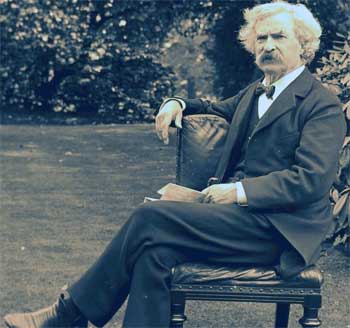
Mark Twain Questions the Intelligent Design (I.D.) Hypothesis

Mark Twain and Intelligent Design

Not many people know that Mark Twain wrote an article in 1903 that questioned the “I.D.”-like hypothesis of Alfred Russell Wallace, who appears to have argued for an early version of the “anthropic principle.” Twainʼs depiction of evolution below, with the evolution of life taking place in a mere “hundred million years” and with both men and birds evolving from the Pterodactyl, is intentionally farcical. Twain deliberately wants to appear bumpkinish in his ideas of evolution (and in the silly names he invents for species) to make the essays final “I Dunno” all the more poignant.

Following Twainʼs essay is another titled, “Little Bessie” from an uncompleted work, The Myth of Providence, that fits in with the theme in the essay below.

I do not present these essays as the last word in the I.D. / Darwinism debate, though I do think that whomever reads them may gain a firmer grasp of the fact that the present dispute is not likely to be “settled” any time soon. (My own middle of the road “Divine Tinkerer” hypothesis does not appeal to many though I find it hopeful without being unrealistic.)

Best, Edward T. Babinski

“Was The World Made For Man?” [1903]

“Alfred Russell Wallaceʼs revival of the theory that this earth is at the center of the stellar universe, and is the only habitable globe, has aroused great interest in the world.”—Literary Digest

“For ourselves we do thoroughly believe that man, as he lives just here on this tiny earth, is in essence and possibilities the most sublime existence in all the range of non-divine being—the chief love and delight of God.”—Chicago “Interior” (Presb.)

I seem to be the only scientist and theologian still remaining to be heard from on this important matter of whether the world was made for man or not. I feel that it is time for me to speak.

I stand almost with the others. They believe the world was made for man, I believe it likely that it was made for man; they think there is proof, astronomical mainly, that it was made for man, I think there is evidence only, not proof, that it was made for him. It is too early, yet, to arrange the verdict, the returns are not all in. When they are all in, I think they will show that the world was made for man; but we must not hurry, we must patiently wait till they are all in.

Now as far as we have got, astronomy is on our side. Mr. Wallace has clearly shown this. He has clearly shown two things: that the world was made for man, and that the universe was made for the world—to steady it, you know. The astronomy part is settled, and cannot be challenged.

We come now to the geological part. This is the one where the evidence is not all in, yet. It is coming in, hourly, daily, coming in all the time, but naturally it comes with geological carefulness and deliberation, and we must not be impatient, we must not get excited, we must be calm, and wait. To lose our tranquillity will not hurry geology; nothing hurries geology.

It takes a long time to prepare a world for man, such a thing is not done in a day. Some of the great scientists, carefully deciphering the evidences furnished by geology, have arrived at the conviction that our world is prodigiously old, and they may be right, but Lord Kelvin is not of their opinion. He takes a cautious, conservative view, in order to be on the safe side, and feels sure it is not so old as they think. As Lord Kelvin is the highest authority in science now living, I think we must yield to him and accept his view. He does not concede that the world is more than a hundred million years old. He believes it is that old, but not older. Lyell believed that our race was introduced into the world 31,000 years ago, Herbert Spencer makes it 32,000. Lord Kelvin agrees with Spencer.

Very well. According to Kelvinʼs figures it took 99,968,000 years to prepare the world for man, impatient as the Creator doubtless was to see him and admire him. But a large enterprise like this has to be conducted warily, painstakingly, logically. It was foreseen that man would have to have the oyster. Therefore the first preparation was made for the oyster. Very well, you cannot make an oyster out of whole cloth, you must make the oysterʼs ancestor first. This is not done in a day. You must make a vast variety of invertebrates, to start with—belemnites, trilobites, jebusites, amalekites, and that sort of fry, and put them to soak in a primary sea, and wait and see what will happen. Some will be a disappointments - the belemnites, the ammonites and such; they will be failures, they will die out and become extinct, in the course of the 19,000,000 years covered by the experiment, but all is not lost, for the amalekites will fetch the home-stake; they will develop gradually into encrinites, and stalactites, and blatherskites, and one thing and another as the mighty ages creep on and the Archaean and the Cambrian Periods pile their lofty crags in the primordial seas, and at last the first grand stage in the preparation of the world for man stands completed, the Oyster is done. An oyster has hardly any more reasoning power than a scientist has; and so it is reason ably certain that this one jumped to the conclusion that the nineteen-million years was a preparation for him; but that would be just like an oyster, which is the most conceited animal there is, except man. And anyway, this one could not know, at that early date, that he was only an incident in a scheme, and that there was some more to the scheme, yet.

The oyster being achieved, the next thing to be arranged for in the preparation of the world for man, was fish. Fish, and coal to fry it with. So the Old Silurian seas were opened up to breed the fish in, and at the same time the great work of building Old Red Sandstone mountains 80,000 feet high to cold-storage their fossils in was begun. This latter was quite indispensable, for there would be no end of failures again, no end of extinctions—millions of them—and it would be cheaper and less trouble to can them in the rocks than keep tally of them in a book. One does not build the coal beds and 80,000 feet of perpendicular Old Red Sandstone in a brief time—no, it took twenty million years. In the first place, a coal bed is a slow and troublesome and tiresome thing to construct. You have to grow prodigious forests of tree-ferns and reeds and calamities and such things in a marshy region; then you have, to sink them under out of sight and let them rot; then you have to turn the streams on them, so as to bury them under several feet of sediment, and the sediment must have time to harden and turn to rock; next you must grow another forest on top, then sink it and put on another layer of sediment and harden it; then more forest and more rock, layer upon layer, three miles deep—ah, indeed it is a sickening slow job to build a coal-measure and do it right!

So the millions of years drag on; and meantime the fish-culture is lazying along and frazzling out in a way to make a person tired. You have developed ten thousand kinds of fishes from the oyster; and come to look, you have raised nothing but fossils, nothing but extinctions. There is nothing left alive and progressive but a ganoid or two and perhaps half a dozen asteroids. Even the cat wouldnʼt eat such. Still, it is no great matter; there is plenty of time, yet, and they will develop into something tasty before man is ready for them. Even a ganoid can be depended on for that, when he is not going to be called on for sixty million years.

The Palaeozoic time-limit having now been reached, it was necessary to begin the next stage in the preparation of the world for man, by opening up the Mesozoic Age and instituting some reptiles. For man would need reptiles. Not to eat, but to develop himself from. This being the most important detail of the scheme, a spacious liberality of time was set apart for it—thirty million years. What wonders followed! From the remaining ganoids and asteroids and alkaloids were developed by slow and steady and pains-taking culture those stupendous saurians that used to prowl about the steamy world in those remote ages, with their snaky heads reared forty feet in the air and sixty feet of body and tail racing and thrashing after. All gone, now, alas—all extinct, except the little handful of Arkansawrians left stranded and lonely with us here upon this far-flung verge and fringe of time.

Yes, it took thirty million years and twenty million reptiles to get one that would stick long enough to develop into something else and let the scheme proceed to the next step.

Then the Pterodactyl burst upon the world in all his impressive solemnity and grandeur, and all Nature recognized that the Cainozoic threshold was crossed and a new Period open for business, a new stage begun in the preparation of the globe for man. It may be that the Pterodactyl thought the thirty million years had been intended as a preparation for himself, for there was nothing too foolish for a Pterodactyl to imagine, but he was in error, the preparation was for man, Without doubt the Pterodactyl attracted great attention, for even the least observant could see that there was the making of a bird in him. And so it turned out. Also the makings of a mammal, in time. One thing we have to say to his credit, that in the matter of picturesqueness he was the triumph of his Period; he wore wings and had teeth, and was a starchy and wonderful mixture altogether, a kind of long-distance premonitory symptom of Kiplingʼs marine:

ʻE isnʼt one Oʼthe regʼlar Line,
nor ʻe isnʼt one of the crew,
ʻEʼs a kind of a giddy harumfrodite [hermaphrodite] —
soldier anʼ sailor too!

From this time onward for nearly another thirty million years the preparation moved briskly. From the Pterodactyl was developed the bird; from the bird the kangaroo, from the kangaroo the other marsupials; from these the mastodon, the megatherium, the giant sloth, the Irish elk, and all that crowd that you make useful and instructive fossils out of—then came the first great Ice Sheet, and they all retreated before it and crossed over the bridge at Behringʼs strait and wandered around over Europe and Asia and died. All except a few, to carry on the preparation with. Six Glacial Periods with two million years between Periods chased these poor orphans up and down and about the earth, from weather to weather—from tropic swelter at the poles to Arctic frost at the equator and back again and to and fro, they never knowing what kind of weather was going to turn up next; and if ever they settled down anywhere the whole continent suddenly sank under them without the least notice and they had to trade places with the fishes and scramble off to where the seas had been, and scarcely a dry rag on them; and when there was nothing else doing a volcano would let go and fire them out from wherever they had located. They led this unsettled and irritating life for twenty-five million years, half the time afloat, half the time aground, and always wondering what it was all for, they never suspecting, of course, that it was a preparation for man and had to be done just so or it wouldnʼt be any proper and harmonious place for him when he arrived.

And at last came the monkey, and anybody could see that man wasnʼt far off, now. And in truth that was so. The monkey went on developing for close upon 5,000,000 years, and then turned into a man - to all appearances.

Such is the history of it. Man has been here 32,000 years. That it took a hundred million years to prepare the world for him is proof that that is what it was done for. I suppose it is. I dunno. If the Eiffel tower were now representing the worldʼs age, the skin of paint on the pinnacle-knob at its summit would represent manʼs share of that age; and anybody would perceive that that skin was what the tower was built for. I reckon they would, I dunno.


Also by Mark Twain, “Little Bessie,” The Myth of Providence

“In His wisdom and mercy the Lord sends us afflictions to discipline us and make us better…All of them. None of them comes by accident; He alone sends them, and always out of love for us, and to make us better, my child.”

“Did He give Billy Norris the typhus, mamma?”

“Yes.”

“What for?”

“Why, to discipline him and make him good.”

“But he died, mamma, and so it couldnʼt make him good.”

“Well, then, I suppose it was for some other reason. We know it was a good reason, whatever it was.”

After a pause: “Did He make the roof fall on the stranger that was trying to save the crippled old woman from the fire, mamma?”

“Yes, my child. Wait! Donʼt ask me why, because I donʼt know. I only know it was to discipline some one, or be a judgment upon somebody, or to show His power.”

“That drunken man that stuck a pitchfork into Mrs. Welchʼs baby when…”

“Never mind about it, you neednʼt go into particulars; it was to discipline the child - that much is certain, anyway.”

“Mamma, Mr. Burgess said in his sermon that billions of little creatures are sent into us to give us cholera, and typhoid, and lockjaw, and more than a thousand other sicknesses and, mamma, does He send them?”

“Oh, certainly, child, certainly. Of course.”

“What for?”

“Oh, to discipline us! Havenʼt I told you so, over and over again?”

“Itʼs awful cruel, mamma! And silly! And if I…”

“Hush, oh hush! Do you want to bring the lightning?”

“You know the lightning did come last week, mamma, and struck the new church, and burnt it down. Was it to discipline the church?”

(Wearily) “Oh, I suppose so.”

“But it killed a hog that wasnʼt doing anything. Was it to discipline the hog, mamma?”

“Dear child, donʼt you want to run out and play a while? If you would like to…”

“Mamma, Mr. Hollister says there isnʼt a bird or fish or reptile or any other animal that hasnʼt got an enemy that Providence has sent to bite it and chase it and pester it, and kill it, and suck its blood and discipline it and make it good and religious. Is that true, mamma, because if it is true, why did Mr. Hollister laugh at it?”

“That Hollister is a scandalous person, and I donʼt want you to listen to anything he says.”

“Why, mamma, he is very interesting, and I think he tries to be good. He says the wasps catch spiders and cram them down their nests in the ground - alive, mama! - and there they live and suffer days and days and days, and hungry little baby wasps chew the spiderʼs legs and gnaw into their bellies all the time, to make them good and religious and praise God for His infinite mercies. I think Mr. Hollister is just lovely, and ever so kind; for when I asked him if he would treat a spider like that, he said he hoped to be damned if he would; and then he…”

“My child! oh, do for goodnessʼ sake…”

“And mamma, he says the spider is appointed to catch the fly, and drive her fangs into his bowels, and sucks and sucks and sucks his blood, to discipline him and make him a Christian; and whenever the fly buzzes his wings with the pain and misery of it, you can see by the spiderʼs grateful eye that she is thanking the Giver of All Good for…well, sheʼs saying grace, as he says; and also, he…”

“Oh, arenʼt you ever going to get tired chattering! If you want to go out and play…”

“Mamma, he says himself that all troubles and pains and miseries and rotten diseases and horrors and villainies are sent to us in mercy and kindness to discipline us; and he says it is the duty of every father and mother to help Providence, every way they can; and says they canʼt do it by just scolding and whipping, for that wonʼt answer, it is weak and no good - Providenceʼs invention for disciplining us and the animals is the very brightest idea that ever was. Mamma, brother Eddie needs disciplining, right away; and I know where you can get the smallpox for him, and the itch, and the diphtheria, and bone-rot, and heart disease, and tuberculosis, and…
Dear mama, have you fainted?”

Question for I.D.ers (Intelligent Design) concerning the “waste” and “junk” in nature

“waste” and “junk” in nature

Question for I.D.ers (in several parts):

How much “waste” and “junk” is there in nature?

  1. Do you accept that “pseudogenes” exist inside all animal genomes? What proportion of the human and/or chimp genome contains them? What is the proportion of pseudogenes to functional genes?

  2. Do you accept that “endogenous retroviral DNA” exists inside all animal genomes? What proportion of the human and/or chimp genome contains “endogenous retroviral DNA?” What is the proportion of the genomes that codes for endogenous retroviral DNA, compared with the proportion of the genome that codes for functional genes?

  3. Do you accept that remnants of misplaced “telomeric chromosomal regions” and remnants of misplaced “centromeric regions” exist inside the human chromosome number two? If you agree both things exist inside the human chromosome number 2, do you think they constitute evidence of a possible “sloppy” fusion of chromosomes in our past ancestors? (Note: When the human chromosome number 2 and the chimpanzee chromosomes 2 and 3 are compared, their overall lengths and the individual bands of human chromosome number 2, and chimpanzee 3 and 4, line up with one another. And, there are remnants inside the longer human chromosome number 2 of “teleomeric regions” and “centromeric chromosomal material,” found in the wrong places inside the chromosome number 2, “as if” the human chromosome number two were formed by the “sloppy” fusion of two separate chromosomes.)

  4. On rare occasions a whale is born with (atavistic) hind limbs. Would you consider those to be a “waste” or “junk?” (Or do you deny with AIG [Answers in Genesis] that such atavistic hind limbs exist on modern day whales?)

  5. A single bacterial cell that divides every twenty minutes, will multiply to a mass four thousand times greater than the earthʼs in just two days. That doesnʼt happen, because of the inconceivably huge death rate of bacteria. If all the eggs from one mother housefly lived, she would produce more than five trillion offspring in just one season. A single oyster, left to its own devices, produces more than one-hundred-twenty-five million eggs in a season. A female sea turtle lays a hundred or more eggs, but after they hatch [and not all do] in a nest buried beneath the sand on the beach, only a handful of baby sea turtles make it to the safety of the ocean. About one hundred million sperm cells are found in each cubic centimeter of human ejaculate. Yet only one sperm lives to fertilize the femaleʼs egg. The rest die. And many fertilized eggs never reach maturity. There are equally bountiful numbers from the world of seed-bearing plants. Among the young of both plants and animals, a large percentage of them are taken by disease and or infected by parasites. In fact, two hundred and fifty years ago one-half of all children born died before reaching the age of seven. Similar figures, or worse, are true of many other animal and plant species as well. Could any of this massive fecundity and death of most of the young of animals and plants be indicative of “waste?”

  6. When asteroids have struck the earth throughout geologic time and killed billions of creatures and caused mass extinctions of species, could that be indicative of “wastefulness” of any kind?

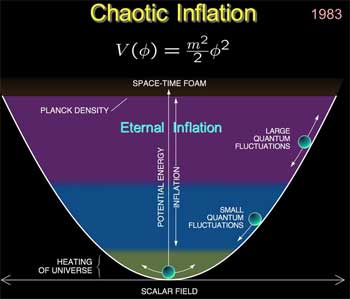
“God” and Chaotic Inflation Theory

“God” and Chaotic Inflation Theory

Excerpts from “It Doesnʼt Take All That Much To Create A Universe

Danieru wrote: It doesnʼt take all that much to create a universe. Resources on a cosmic scale are not required. It might even be possible for someone in a not terribly advanced civilization to cook up a new universe in a laboratory. Which leads to an arresting thought: Could that be how our universe came into being?

“When I invented chaotic inflation theory, I found that the only thing you needed to get a universe like ours started is a hundred-thousandth of a gram of matter,” Linde told me in his Russian-accented English when I reached him by phone at Stanford. “Thatʼs enough to create a small chunk of vacuum that blows up into the billions and billions of galaxies we see around us. It looks like cheating, but thatʼs how the inflation theory works—all the matter in the universe gets created from the negative energy of the gravitational field. So, whatʼs to stop us from creating a universe in a lab? We would be like gods!”
[…]
“You might take this all as a joke,” he said, “but perhaps it is not entirely absurd. It may be the explanation for why the world we live in is so weird. On the evidence, our universe was created not by a divine being, but by a physicist hacker.”

Lindeʼs theory gives scientific muscle to the notion of a universe created by an intelligent being. It might be congenial to Gnostics, who believe that the material world was fashioned not by a benevolent supreme being but by an evil demiurge. More orthodox believers, on the other hand, will seek refuge in the question, “But who created the physicist hacker?” Letʼs hope itʼs not hackers all the way up. - The Big Lab Experiment
The idea that universes somehow ‘evolve’ stems naturally from this.

A universe capable of maintaining life expands, cools and grapples with its own entropic forces
The life evolving within that universe has enough time and resilience to achieve a level of intelligence equal or greater to our own
That life becomes aware of other universes (perhaps of an infinite variety) residing in higher dimensions of reality
The desire to join in the multiversal fun grows beyond all reason…

At this point a baby universe is made in a lab, or by whatever means, and branches off. The baby universe contains enough of the ‘genetic’ information of the parent universe for it to be deemed a relative.

Perhaps intelligent life tweaks the contributing factors in its baby universe, effectively altering its composition to suit their self-reflective needs. In this way universes would evolve, intelligent life being their means of procreation. Perhaps all reality is this way. Perhaps our universe is still in its infancy, a larger, protective parent exerting its gravitational force across the many planes of the multiverse.

Perhaps…

Dr. Orphusi writes:
I like this hypothesis.

Itʼs not unlikely that our universe has already spawned a baby universe, fostered to life by an intelligent species in some far off galaxy that had a head-start on us. I wonder what sort of universe they have created?

But hereʼs a question…

We speak of spawning baby ‘universes’, but perhaps we can only really create galaxies/worlds within a single sub-universe, or more precisely, a single reality, the one which is created by our hands in our reality. How can I explain this…?

When and if we create a baby universe of our own, I think that it could be a part of the same sub-universe as the one created by the hypothetical ‘other’ intelligent species in some far away galaxy.

So their baby universe is really just a part of the sub-reality in which our own baby universe is a part…

And it keeps cascading downwards, one reality at a time…

Although itʼs possible that because the nature of the consciousness of each species (human, extraterrestrial) is different (is it, I wonder?), then the universes we create will naturally be separately realized.

Either way, itʼs an intriguing question. However I believe our universe is beyond its infancy… we canʼt guess at the extraterrestrial chances of self-reflection, but when man first perceived the world and himself, it was then that the universe changed… like a blind baby recently emerged from its motherʼs womb, opening its eyes for the first time. But more analogously, I think our universe is akin to a child that can begin to remember, that can speak and make sense of its thoughts. Its growing up as we grow up.

Ishmael writes:
Iʼd be interested to know how Lindeʼs theory comes to terms with the first law of thermodynamics—while itʼs probably pointless for a non-physicist such as myself to wonder about such things, the technical details of a pocket universe would seem to offer some clue as to their nature.

For instance, assuming that they do obey the laws of thermodynamics—that no energy is created in the creation of a new universe, and that they simply subsist on the energy of the tiny chunk of matter that they are created from in the parent universe, does that mean that their energy levels are simply “scaled down” from ours? And what of the sizes of fundamental particles? Are their protons small than our protons? But that would seem to contradict one of the most interesting passages in the article, namely that such constants are variable:

But then Linde thought of another channel of communication between creator and creation—the only one possible, as far as he could tell. The creator, by manipulating the cosmic seed in the right way, has the power to ordain certain physical parameters of the universe he ushers into being. So says the theory. He can determine, for example, what the numerical ratio of the electronʼs mass to the protonʼs will be. Such ratios, called constants of nature, look like arbitrary numbers to us: There is no obvious reason they should take one value rather than another. (Why, for instance, is the strength of gravity in our universe determined by a number with the digits 6673?) But the creator, by fixing certain values for these dozens of constants, could write a subtle message into the very structure of the universe. And, as Linde hastened to point out, such a message would be legible only to physicists.

(Insert here the obligatory reference to Contact. Note also the relationship between the present topic and Stephen Baxterʼs excellent Manifold trilogy, in which (spoilers) the first book resolves the Fermi Paradox by positing multiple universes, some sterile, some life-bearing, and one (ours) just lucky enough to eke out one sentient civilization—a fluke—but a fluke that enables the protagonist to have a hand in the creation of another, more promising universe.)

But then, perhaps pocket universes do not obey the first law—at least in the sense that we know it. Let “Existence” denote the sum of all universes and pocket universes. Perhaps the total amount of energy in Existence is constant, but fluid throughout its constituent universes. That is, energy does exit and enter any given universe* while coursing through the totality. This idea could gel in several ways with Dr. Orphusiʼs ideas of multiple realities; i.e., energy is constant within a reality, but does not travel between them. This would still mean, though, that there is a “direction” to the flow of energy throughout Existence. That older universes die while young ones are born, the energy leaving them and pouring into the new creations, and actually, unless there is some bracketing factor such as Orphusi suggests, the multiplicative proliferation of new universes would demand more energy than Existence is able to provide, and none of the pocket universes would have the energy to develop into universes at all, much less life-bearing ones. Essentially, itʼs heat death all over again. Or have I missed something essential?

*Note the presence of undeveloped and probably incoherent ideas here about dark energy and the weakness of gravity. Prompted in part by Danieruʼs poetic conclusion “across the many planes of the multiverse,” and in part by some Scientific American article I read long ago about gravityʼs strange weakness compared to the other fundamental forces, perhaps accountable by its operation through many universes.

There is also the question, returning briefly to my inquiries about scale, of instability below the Planck length. If, as the article says, a pocket universe would not expand outward, consuming its parent, but would curl inward until it is imperceptibly tiny, at what point do new universes become impossible because of the random energy fluctuations that permeate space? Or does it possess its own space? I hope someone here knows more about physics than I do…

Annnd, winding up now, for now, let us not forget virtual universes, a subject near and dear to my heart. What are the possibilities, if any, for sentient life (or simply life, if you see a difference…) to develop in a virtual universe? Such a universe would necessarily be limited by the physical constraints of its parent universe (its largest possible scope being the parent universe itself, if you buy the idea of our universe as a giant computer), but as we have seen on the Exponentially Small Planet Earth, one hardly need simulate a universe to obtain life. It would seem not to, in fact, take a village to raise a child, if by “village” you mean galaxy or interstellar community, and if by “child” you mean us. Many more thoughts here, but methinks I ought best stop typing.

Danieru writes:
Many thoughts Iʼll dare to dwell on… Lovely replies…

Gravity is the only force thought to permeate the dimensional barriers. As Ishmael alludes to, gravity is undoubtedly the weakest force we have knowledge of (a magnet the size of a pea can overcome the gravity of the entire planet Earth when used to pick up a paper clip). Yet gravity is the true craftsman of reality, carving pathways which galaxies, planets and people can roam; building pockets of entropically divergent matter where life finds time to evolve.

I like the idea that the beginning of the universe, i.e. the big bang, is a black hole in reverse (a white hole). Michio Kaku manages this image better than I:

If the singularity at the center of a black hole lies in the future, representing a final state, the singularity of a white hole lies in the past, as a beginning, as in the big bang. So if our universe is a white hole, the big question is: is there a black hole universe on the other side of the big bang?
So, youʼve spawned your baby universe in your massively expensive laboratory, but you are worried it will off-set the balance of nature (the first law of thermodynamics)? What if that first law could be balanced both in and outside the system we understand as this universe?

The baby universe is on the opposite side of a black hole for all intents and purposes. Perhaps it continues to feed off the energy of its parent, or maybe its black hole status is short lived; the bubble segmenting off from our reality and floating off into the multiverse alone. Either way, because energy is mass (Einstein says hello) and because all matter exerts gravity across the multidimensional planes, the baby universe and the parent universe would balance each other out. The baby universe might be obtaining energy from this reality, but in turn its gravitational presence acts as a stabilizing force, effectively keeping equilibrium in check across the planes.

Now, my physics here is shaky, granted, but you get my over all point: nothing, not even a universe, is completely self contained. Beyond the temporally formalized singularity we call ‘the beginning of time’ there is surely a primeval source of energy, and beyond that countless infinities more besides. Perhaps, if you take the perdurantist view on temporality, time itself should not be factored into the model we have drawn. In this way energy could enter the system at any point along the time axis, just as long as the first law of thermodynamics kept balance in balance in balance in balance throughout the entire system*….

Gets you thinking though for sure. Do all black holes lead to baby universes?

*The entire system in the perdurantistʼs view encompasses all the universe from the ‘beginning’ to the ‘end’ of time. Imagine time as a 4th dimension, effectively turning the universe into one fat 4 dimensional block of cheese. Slice through the cheese at the 14.3 billion year mark and youʼll find me typing this, you reading this or an empty forum in want of a conversation. Only by looking at the whole of the cheese can you be said to be perceiving the universe…

Author writes: I canʼt quite get my head around the fact that Iʼm looking at the inside of a sphere, which has a radius of the distance traveled by the light of the big bang; when Iʼm seeing the outside of the smallest sphere imaginable, seeing as how I look back to the beginning of time in all directions.

Intelligent Designer or Tinkerer?

Intelligent Designer or Tinkerer?

In the beginning, or, rather, before the Big Bang, the Designer fine-tuned six cosmological constants. But that merely resulted in heating and lighting vast realms of lifeless space, and created a cosmos with colliding galaxies, exploding stars, quasars emitting dangerous radiation, black holes sucking star systems into oblivion, meteors, asteroids and comets pounding the life out of whole planets - in other words, a universe coming to death blows with itself, imperiling any life that may arise in it.

If you are an “Intelligent Design” proponent who accepts the earth is ancient, then you must also accept that the Designer used all his care, wisdom and power to design millions of creatures that arose at precise times over periods of hundreds of millions of years. But He didnʼt use that same care and wisdom and power to spare his little darlings from falling asteroids, glaciations, volcanic eruptions, earthquakes, droughts, floods, storms, viruses, bacteria, parasites, and the fangs and claws of their fellows. In fact, the Designer utterly destroyed species after species in five great extinctions, not to mention many lesser extinctions that mark the end of nearly every period in the geologic record. Also, as Malthus and Darwin pointed out, some animals lay tens of thousands of eggs and some plants produce tens of thousands of seeds. Relatively few survive. They are born only to die.

Nor did this Designer get things right the first time. He has had to keep tinkering with creatures over periods of millions of years. He tinkered with reptiles in order to produce synapsids, “mammal-like” reptiles with double jaw joints; then tinkered with those synapsids to produce true mammals by shrinking the second jaw joint until it became an inner ear bone. Such a transition can be traced in the fossil record.

He also tinkered with feathered dinosaurs until he had a few that could fly, but not very well, since the earliest ones all retained reptilian features that hindered their ability to fly, like the lack of a large keel bone to anchor large flying muscles. They also had teeth and long bony tails. So early flying reptiles were heavier, making it more difficult to fly. Their skulls were still triangular and thick like in reptiles, instead of smooth, light and helmet-shaped like modern birds. Their long bony tails added drag, and their wrist bones were not fused, which limited maneuverability and steadiness in flight. So, the Designer tinkered with the first feathered fliers every few million years, until he designed better ones. No evidence here that such a Designer was perfect or could get it right the first time. Again, why did the Designer have to tinker with monkeys for millions of years, then tinker with larger brained primates for millions more, before producing “man?”

Iʼd say the “Intelligent Design hypothesis” should be renamed, the “Tinkerer hypothesis.” For all we know this Tinkerer may have even fiddled with creating more than one cosmos which was incapable of sustaining life before discovering the right “cosmological constants” that could produce a cosmos capable of sustaining life as precariously as ourʼs does. Of course the hypothesis that “cosmological constants were tinkered with before our cosmos was born” is impossible for us to verify or deny. But the “Tinkerer hypothesis” seems to fit what we do know about the cosmos and life on earth after the Big Bang, and for that reason, it has more to recommend it than the “Design hypothesis.” [B. and Kenneth E. Nahigian]

Suppose that upon some island we should find a man a million years of age, and suppose we found him living in an elegant mansion, and he should inform us that he lived in that house for five hundred thousand years before he thought of putting on a roof, and that he but recently invented windows and doors; would we say that from the beginning he had been an infinitely accomplished and scientific architect? [Robert Ingersoll]

Some ID-ers believe in a Designer who instantaneously created different plants and animals and plopped them down at different points in geologic time. This means that a vast multitude of animals and plants were created only to suffer pain and death over periods of millions of years and then have their species become extinct. “Designing” creatures for pain, suffering and extinction, and then having to “design” some more for that same “purpose,” was repeated again and again, all before man arrived on the scene.

At least in an evolutionary scheme, no animal or plant arises just for the “purpose” of going extinct, but so that it may play a part in the ever branching struggle to occupy new niches and continue the evolution of life on earth. Thus, evolution allows theists to make more sense out of millions of years of animal life, death and extinction, than the “Intelligent Design hypothesis” does. - B.

“How do you explain the beauty and harmony of nature?”

Answer: “Throughout the animal kingdom, animals prey upon each other or die of hunger (or nature kills them in a myriad other ways). For my part, I am unable to see any great beauty or harmony in the tapeworm. Let it not be said that this creature is sent as a punishment for our sins, for it is more prevalent among animals than among humans. I suppose the questioner is thinking of such things as the beauty of the starry heavens. But one should remember that stars every now and again explode…” [Bertrand Russell, “What Is an Agnostic?”]

How can one speak about the “mercy and goodness” of a nature in which so many animals devour animals, where so many mouths are slaughter-houses and stomachs are tombs? “Observe,” said the minister to his son, “the beneficent design with which the crane is fashioned - legs, bill, and feet - to catch fish with ease and be fed.” “Yes,” replied the boy, “I think I see the beneficence of God, at least so far as the crane is concerned, but donʼt you think the arrangement a little hard on the fish?” [E. M. Mcdonald, Design Argument Fallacies]

A butcher-bird impaling its victim on a thorn, or a lion killing a gazelle, or a cat biting a mouse, or a tick feeding on the eye of a fowl, or an intestinal worm eating in the entrails of a priest are all part of the “divine plan” which theists say exists. [Woolsey Teller]

Can we find “design” in the fact that even in every drop of every sea is a battlefield in which the strong devours the weak? [Robert Ingersoll]

People who believe in “intelligent design” point us to the sunshine, to flowers, to the April rain, and to all there is of beauty and of use in the world. Did it ever occur to them that a cancer is as beautiful in its development as is the reddest rose? That what they are pleased to call the adaptation of means to ends, is as apparent in the cancer as in the April rain? By what ingenious methods the blood is poisoned so that the cancer shall have food! By what wonderful contrivances the entire system of man is made to pay tribute to this divine and charming cancer! What beautiful colors it presents! Seen through a microscope it is a miracle of order and beauty. All the ingenuity of man cannot stop its growth. Think of the amount of thought it must have required to invent a way by which the life of one man might be given to produce one cancer. Is it possible to look upon it and doubt that there is a design in the universe, and that the inventor of this wonderful cancer must be infinitely powerful, ingenious and good? [Robert Ingersoll]

The cosmos is a gigantic fly-wheel making 10,000 revolutions a minute. Man is a sick fly taking a dizzy ride on it. Religion is the theory that the wheel was designed and set spinning to give him the ride. [H. L. Mencken]

We are all naturally like that madman at Athens, who fancied that all the ships were his that came into the Port of Pyraeus. Nor is our folly less extravagant. We believe all things in nature have been designed for our use. Ask any theologian why there is such a prodigious number of stars when a far lesser number would perform the service they do us, and he answers coldly, “They were made to please our sight.”
[Bernard de Fontenelle, A Plurality of Worlds, published in 1686]

Was the Universe Made for Man or Flea?

Until the 1800s almost everyone had fleas and lice. In the 1600s it was considered bad manners to take lice, fleas or other vermin from your body and crack them between your fingernails in company.
[Tim Woods and Ian Dicks, What They Donʼt Teach You About History]

Obviously only a Designer would have had the infinite wisdom and compassion to create “the flea” - a tiny insect with a thin body for moving easily through hair, and with immensely powerful legs for leaping many times their body length onto passing prey; and with the added ability to not just harry and bite, but to spread infections, including plague germs which killed tens of millions of people in Europe and Asia in a few short years. [B.]

My dear fleas, you are the cherished work of God; and this entire universe has been made for you. God created man only to serve as your food, the sun only to light your way, the stars only to please your sight, etc.
[Voltaire, “Sermon Preached Before Fleas”]

Can anyone really think itʼs all there just for us? A goldfish in a bowl has as much right to imagine the galaxy was built for it. [Kenneth E. Nahigian]
It took billion of years to prepare the cosmos and billions more to prepare the earth for man, impatient as the Creator doubtless was to see him and admire him. Civilized man has been here maybe less than 32,000 years. If the Eiffel Tower were now representing the worldʼs age, the skin of the paint on the pinnacle-knob at its summit would represent manʼs share of that age; and anybody would perceive that that skin was what the tower was built for.
[Mark Twain, “Was the World Made For Man?”]

Are we really so splendid as to justify such a long prologue? The philosophers lay stress on values: they say that we think certain things good, and that since these things are good, we must be very good to think them so. But this is a circular argument. A being with other values might think ours so atrocious as to be proof that we were inspired by Satan. Is there not something a trifle absurd in the spectacle of human beings holding a mirror before themselves, and thinking what they behold so excellent as to prove that a Cosmic Purpose must have been aiming at it all along? Why, in any case, this glorification of Man? How about lions and tigers? They destroy fewer animal or human lives than we do, and they are much more beautiful than we are. How about ants? They manage the Corporate State much better than any Fascist. Would not a world of nightingales and larks and deer be better than our human world of cruelty and injustice and war? The believers in Cosmic Purpose make much of our supposed intelligence but their writings make one doubt it. If I were granted omnipotence, and millions of years to experiment in, I should not think Man much to boast of as the final result of all my efforts.
[Bertrand Russell, “Cosmic Purpose” in Religion and Science]

Weʼre just a virus with shoes.
[comedian Bill Hicks, CD, Rant in E-Minor]

Thereʼs these Christian fundamentalists, the ones who are trying to get creationism taught in school as a science. I think it would be great because it would definitely be the shortest class of the day. “Welcome to creationist science. In the beginning God created the heavens and the earth. On the seventh day he rested. See ya at the final!” - Bill Hicks (comedian)

I believe in equal time for creation science. But since creation only took six days and evolution took billions of years, the equivalent time spent teaching creationism should be six seconds for every twelve years of evolutionary science.
- Skip Church, _The Damned Say the Damndest Things_

ftom24: when God created all was Good and right, no collisions, no death, none of what we see today…but thatʼs a subject for another board….

Edward Babinski: Well, if youʼre going to ignore modern geology and respond to what I wrote with a totally unevidenced theological defence that the world was originally “perfect” with “no death, none of what we see today,” then canʼt I respond with some simple questions of my own?

Mosquitoes In Paradise?

It doesnʼt matter to me whether Adam and Eve were created with or without bellybuttons.” I want to know, were they created with or without anuses? Did they fart? Did they defecate? Did their feces stink? How about their armpits? Did God feel the least bit obliged to give Adam and Eve the recipe for soap? In other words, wouldnʼt Adam and Eve have been “ashamed” of any number of things long before they were “ashamed” to discover they were “naked?”
Or, as Adam once put it, “Eve, pick some of those soft leaves next time, Iʼm getting chaffed!”
- Skip Church

Some creationists insist that the original creation was so perfect there was “no decay.” No decay my ass! Or should I say, “Adamʼs ass?”
- Skip Church

There was also pain in paradise. How do I know? It says in Genesis that God “cursed woman” by “increasing or multiplying” her pain in childbirth, and you canʼt “increase or multiply” what isnʼt already there.
- Skip Church

He made a man and a woman and placed them in a pleasant garden, along with the other creatures. They all lived together there in harmony and contentment and blooming youth for some time; then trouble came. God had warned the man and the woman that they must not eat of the fruit of a certain tree. And he added a most strange remark: he said that if they ate of it they should surely die. Strange, for the reason that inasmuch as they had never seen a sample of death they could not possibly know what he meant. Nor would he or any other god have been able to make those ignorant children understand what was meant, without furnishing a sample. The mere word could have no meaning for them, any more than it would have for an infant of days.
- Mark Twain, Letters from the Earth

(Scene: Garden of Eden. Afternoon. A glade in which lies a fawn all awry. Adam is staring in consternation at the fawn. Eve arrives and notices the animal.)
Eve: What is the matter with its eyes?
Adam: It is not only its eyes. Look. (He kicks it.)
Eve: Oh donʼt! Why doesnʼt it wake?
Adam: I donʼt know. It is not asleep.
Eve: Not asleep?
Adam: Try.
Eve: (Trying to shake it and roll it over) It is stiff and cold.
Adam: Nothing will wake it.
Eve: It has a queer smell. Did you find it like that?
Adam: No. It was playing about; and it tripped and went head over heels. It never stirred again. Itʼs neck is wrong. (He stoops to lift the neck and show her)
Eve: Donʼt touch it. Come away from it… Adam, suppose you were to trip and fall, would you become like that?
Adam: (He shudders)
Eve: You must be careful. Promise me you will be careful.
Adam: What is the good of being careful? We have to live here for ever. Think of what for ever means! Sooner or later I shall trip and fall. It may be tomorrow; it may be after as many days as there are leaves in the garden and grains of sand by the river. No matter: some days I shall forget and stumble.
Eve: I too.
- George Bernard Shaw, Back to Methuselah

How can some Bible believers state with a straight face that there was “no animal death before the fall of man?” Was the movement of every creature in Eden finely choreographed? Monkeys swinging wildly from tree to tree, but never crushing an insect on a branch or upsetting an egg in a nest? Brontosauruses dodging ants, worms and small mammals with each gargantuan step? Iʼd love to see a ballet like that on the Arts and Entertainment network!
- Skip Church

Excerpts from “The Diary of Adam and Eve”

(A PARODY)
Friday: She [Eve] engages herself in many foolish things: among others, trying to study why the animals called lions and tigers live on grass and flowers, when, as she says, the sort of teeth they wear would indicate that they were intended to eat each other. This is foolish, because to do that would be to kill each other, and that would introduce what, as I understand it, is called “death”; and death, as I have been told, has not yet entered the Garden.
Thursday: She is in much trouble about the buzzard; says grass does not agree with it; is afraid she canʼt raise it; thinks it was intended to live on decayed flesh. The buzzard must get along the best it can with what is provided. We cannot overturn the whole scheme to accommodate the buzzard.
Friday: She says the snake advises her to try the fruit of that tree, and says the result will be a great and fine and noble education. I told her there would be another result, too - it would introduce death into the world. That was a mistake - it had been better to keep the remark to myself; it only gave her an idea - she could save the sick buzzard, and furnish meat to the despondent lions and tigers. I advised her to keep away from the tree. She said she wouldnʼt. I foresee trouble. Will emigrate.
- Mark Twain

Ah, fair Eden of creationist lore, where sharks spit out tiny fish they accidentally swallowed after taking a large bite of seaweed. And where spiders assisted in the release of insects that accidentally flew into their webs.
- Skip Church

Thereʼs these Christian fundamentalists, the ones who are trying to get creationism taught in school as a science. I think it would be great because it would definitely be the shortest class of the day. “Welcome to creationist science. In the beginning God created the heavens and the earth. On the seventh day he rested. See ya at the final!”
- Bill Hicks (comedian)

I believe in equal time for creation science. But since creation only took six days and evolution took billions of years, the equivalent time spent teaching creationism should be six seconds for every twelve years of evolutionary science.
- Skip Church, _The Damned Say the Damndest Things_

DNAunion: The author obviously does not know the differences between ID and Creationism. I know the differences. I was hoping to address both at once by use of the phrase, “arose at discrete times.” I carefully avoided saying exactly HOW they would arise. This becomes clearer the more one reads the posted material - direct references to Adam and Eve, no death before “The Fall”, God of the Bible, the Bible itself, Christian Fundamentalists, teaching Creationism in school, etc. The authors are obviously addressing Creationism specifically in almost every instance, yet they claim to be discussing ID.

Edward Babinski: ID in its ideal form has nothing to do with those things, but the majority of folks who make up the ID movement are self-proclaimed “Bible believers” including the major editors and contributors to Origins and Design like Dembski (a creationist, old or young I am not sure), Paul Nelson (young-earth creationist), Philip Johnson (creationist). In fact, my first response on this board was from an IDer who told me flat out that he believed in a “perfect” creation with “no death” in a way that young-earth creationists espouse.

Best, Ed

Mike: It is clear that Ed confuses ID with a metaphysical notion about the way things ought to be. That is, he seems to be assuming that if ID was true, the designer would not only be designing every aspect of reality, but would be doing so such that Paradise (the Best of All Possible Worlds) would be designed.

Edward Babinski: The _extent_ of massive extinctions and animal suffering and pain over geologic time with creatures being evolved/created merely to become extinct, long before man even arrives on the scene was what I was pointing out. You apparently “got” that point and seem willing to agree to some extent that this is NOT the “best of all possible worlds” that an infinitely good and infinitely wise creator is capable of designing.

The truth of ID (or the teleological viewpoint) does not entail the non-existence of earthquakes and fangs.

Edward Babinski: I wasnʼt disagreeing, I was merely pointing out that the world could also be explained as the product of a divine tinkerer rather than an infinitely wise and infinitely loving designer. You seem to be agreeing with me that that is a possibility.

Ed relies completely on subjective impressions to argue that this is an example of “not getting it right.” An intelligent designer may very well have designed gradually.

Edward Babinski: “Gradually,” yes. “Less than optimally” was what I was pointing out. The earliest birds are not nearly as well designed for flight as later examples. And Iʼm sure that double jaw joint in reptiles was less than optimal, and proved a bit of a problem for that animal until the second jaw joint got incorporated as ear bones. Again, the notion of a tinkerer comes to mind.

That is, by carefully choosing a stem population best poised to accept such modifications, one could use guided interventions to carefully tease out and exploit the potential of any organism and then strategically guide its evolution to a targeted end-state.

Edward Babinski: “Carefully teased out?” I guess the author does not accept that God “rested” on the seventh day of creation, but instead is still carefully teasing out creation. Well there goes Genesis. Also, weʼve gone from a God who “commands, and it is done,” to a God who is “carefully teasing things out.” Nor is this Designer capable of having water bring forth birds and fish directly, and having the earth bring forth animals directly as it says in Genesis. Instead, creatures are “carefully teased out” of one another. And what if God isnʼt “careful enough?” What if He misses a “tease” or two? What results then? The ID explanation leaves a lot to be desired when viewed in a biblical theological vein, not to mention the fact that the “Designer” has made it so that the cosmos sends asteroids to destroy His “carefully teased out” creatures. Whereʼs the “care” in that?

While Ed might assume that such evolution was a consequence of random mutations and natural selection,

Edward Babinski: I did not highlight “random mutations and natural selection” in my piece. In fact, I made it clear that I was arguing for an ID explanation that appeared as rational and logical as any other ID explanation, namely, A Divine Tinkerer. Itʼs obvious that the IDers who have responded to my piece thus far have not understood what I originally wrote, but instead concluded that I was misunderstanding THEM. Baloney. I know ID and the I know the difference bewteen ID and creationism. But they donʼt know when someone like me is suggesting a less than grandiose version of ID, a “Divine Tinkerer.”

The third problem is that Ed ignores the many examples where, even according to his standards, things were gotten right from the beginning. The genetic code itself makes for a very good example that was gotten right.

Edward Babinski: Yeah, the genetic code, the human genome, 99% of which is heavily mutated junk with no on-off codons. Why not study and discuss shared homologous pseudogenes, and also shared homologous retro-viral sequences in both man and the nearest living species to man — with whom we share a lot of the same junk. I guess the Designer designed all that junk for a reason. Or maybe just maybe DNA isnʼt exactly an optimal “design.”

Also see the chapter on pseudogenes and genetic junk in the new book, Genome : The Autobiography of a Species in 23 Chapters — Matt Ridley

Or what about the eukaryotic cell cycle? Cell cycle genes from humans can replace those in yeast, indicating that billions of years of evolution have not “improved” these genes in either lineage. Better yet, consider ubiquiton. Here is a 76-amino acid protein that plays an essential role in regulated protein degradation. When one compares the amino acid sequence of this protein from various protozoans and yeast with those of mammals, there are only three differences and all involve conserved substitutions. Yet among bacteria, Ub does not even exist. Thus, here is an another example where something was gotten right in the beginning and has not since been improved by billions of years of evolution. If Ed wants to use examples of change as examples against ID,

Edward Babinski: My piece wasnʼt an argument against ID, but simply argued for the possibility of a less than impressive Designer, a “Divine Tinkerer.” Nor can the fact that a few genes are found in nearly exactly the same form throughout much of the animal kingdom (and have to retain their exact sequences in order to work effectively), be used as an argument against evolution by either design or natural selection.

There is no reason to respond to the rest of Edʼs posting. IMO, it amounts to little more than spam which seeks to smuggle in theological/metaphysical arguments in place of the level-headed analysis that is needed to determine if certain biological features more likely owe their origin to intelligent design or a blind watchmaker.

Edward Babinski: It is ID that is attempting to “smuggle” into the scientific enterprise miraculous explanations in place of step by step progress in knowledge that has to be sought diligently and “carefully coaxed” out of nature after much time and experimentation. ID will no doubt continue to attract amateur theologians (like Dembski) and feed the theological sense of awe, i.e., of instantaneous miracles so subtle they require an IDer to point them out to other people and point proudly at exactly which points in creation the Designer had to pull another rabbit out of His hat. IDerʼs also resemble people who want to just shake a box filled with jigsaw puzzle pieces and if they donʼt connect, give up. Or imagine that God has solved the puzzle already and knows where all the pieces go, so there is no need for _them_ to try and solve it as well. Itʼs enough that they remain awed by Godʼs accomplishment.

Meanwhile, the theory of evolution will continue to attract people with far more patience and curiosity, whose greatest passion is to fiddle with the jigsaw pieces of the cosmos, putting together the pieces to discover how the elements and their unique molecular bonding properties evolved out of simple hydrogen atoms fusing together (i.e., nucleogenesis inside stars), and how man evolved from billion-year-old carbon, one step at a time. Thatʼs the kind of “awe” that thrills a scientistʼs soul.

Best, Ed

Tom: My belief in supernatural creation (which in my belief means it was perfect before sin) shows that when sin became reality, then the world began to deteriorate into the state we have today.

Edward Babinski: Tom, Just tell me what you mean by “perfect.” Is the eating the hence the death of plants included in your definition of “perfection?” What about the deaths of any insects or very small multicellular animals attached to those plants which a large plant-eating animal might also ingest with each leaf or piece of fruit it bites into and eats? Or, like I suggested, a shark eating seaweed, and also swallowing small baby fish who were also eating the same seaweed. Thatʼs fish death. Also, speaking of death, if no animals died, but they produced as many offspring as they do today and all the offspring survived, then a single bacterium could envelope the earth with its offspring in something like a few days. A single oyster could envelope the earth with all its offspring and crowd all the water out of the oceans in less than a year. And what about death due to accidental drowning or falling accidents or tipping over the nests of other animals accidentally or stepping on animals accidentally? And of course, thereʼs the process of elimination of gas and solid waste in the colon which doesnʼt seem to be “perfection" to me.

And thereʼs also the death of cells in our own bodies, like skin and hair cells. Even the development of our brains requires an enormous amount of brain cells dying each day after we are born, in order for our brains to develop their own “individual and social reality networks,” whereas without such natural brain cell death, our sensations would probably be overloaded and our thoughts confused. So, “death” seems an inevitability in nature, indeed a necessity in so many ways, part of the warp and woof of the cosmos. Without hydrogen atoms “dying” to become fused into something new and different inside stars, and wasting a helluva lot of energy in the process (entropic energy waste) there wouldnʼt be elements galore, but just hydrogen atoms. What kind of world do possibly imagine could exist without the many “deaths” above? The Bible itself speaks of God “multiplying” Eveʼs pains during childbirth, and you canʼt “multiply” what isnʼt already there. So, there was “pain” in “Eden” too. And even Henry Morris had it out with Robert Kofahl, two young-earth creationists, who debated in The Creation Research Society Quarterly such topics as whether or not the 2nd law of thermo-d was in action prior to “the Fall.” Kofahl pointed out to Morris that without the 2nd law being in effect Adam could not have even digested the fruit he ate.

So, do you have the slightest idea what you are talking about when you speak of the world being “perfect” before “the Fall?” Nor does the Hebrew tale of the expulsion from Eden describe any more “curses” than the introduction of thorns and thistles, the curse of the snake to go on its belly (how it moved about before it was cursed to go on its belly, the story does not say), and the increase of womanʼs pain in childbirth. Doesnʼt sound like the whole of creation was changed radically, just a few discrete changes. Besides to change it radically would have meant recreating it as a whole, and God “rested” after the sixth day.

Your belief in the unspecified “perfection” of creation “prior to the Fall,” kind of reminds me of the way some creationists woo an audience with tales of how “BIG” things used to be on earth “before the Flood,” when the world was “more perfect,” like thirty-foot tall cattails and big dragonflies with huge wingspans and dinosaurs, etc. But I point out to such folks that some dinosaurs were also the size of chickens, and that the biggest plants and animals ever known are living today in our “less than perfect world,” animals like the Sequoia and the Blue Whale.

Lastly, what about fellow ID folks who disagree with your views concerning the “perfection” of creation, but who instead accept the vast age of the cosmos? I should think theyʼd raise many of the same questions I raised above, asking you to please just try to explain what you mean by “perfect.”

Best, Ed