

Showing posts with label intelligent designer. Show all posts

Human Value According to the Cosmos and also According to the Bible?

Human Value According to the Cosmos and also According to the Bible?

How intrinsically “valuable” are human beings according to the cosmos and also according to the Bible? In the cosmos all living things die, including human beings, and even some of the tiniest forms of life live by sucking the life out of the ones with the largest brains and/or the biggest hearts. As for the Bibleʼs view of humanityʼs intrinsic “value,” even more questions arise, a wide variety in fact.

First, letʼs review the most direct and common recognitions of humanityʼs place in the cosmos:

The Cosmos and Human “Value”

Every living thing in the cosmos dies. There is plenty of evidence that our home planet, the earth, has been struck by large objects from space. Visible fiery meteors continue to enter the earthʼs atmosphere from time to time some even videotaped, and some larger objects from space have passed so close to the earth in the past few decades that their pathways were within the distance from the earth to the moonʼs orbit. Also, a little behind the arm of the Milky Way in which our solar system lies, there are stars being drawn into our galaxy from a nearby smaller galaxy, and so over a million stars are entering our galaxy and their gravity is interacting with stars found in our galaxy which can cause grave problems for any planets on those stars as they pass nearby each other. Lucky for us the arm of the galaxy where our solar system lies has just recently (in galactic time) already passed through that danger zone where the stars keep entering our galaxy. Also note that a solar flare from our own sun came so near the earth in the 1990s that it disabled satellite and cell phone communication. The earthʼs magnetic field is also diminishing (viz., the earthʼs poles shift in polarity and power over time, and a “few generations from now” our planet will soon be in a down phase, lacking a magnetic shield, and no one knows for sure how that might effect life on earth, or affect how electronic-based technology—computers and telecommunications function). I also read that dangerous gamma radiation was detected striking the earth in bursts coming from the vicinity of a “magnestar” that blew up in our general part of the galaxy. That could be quite dangerous if the star were just a bit nearer. Others have supposed that radiation from a star going nova in our vicinity might have instigated some extinctions in the past. Though if any star went nova near the earth that might be it for all life on earth. So this cosmos provides uncertainties galore concerning the continuance of life. Even stars and galaxies in our cosmos have finite lifetimes (though the question of what sort of infinite matrix all cosmoses might lie within, or how that matrix generates new cosmoses, remains an open one in physics and philosophy).

Astronomers have evidence of rings of matter and even planets surrounding distant stars, so there might be planets in the cosmos other than earth on which sentient beings live (found in the “galactic habitable zone” of our galaxy or of distant galaxies, since thereʼs over a hundred billion other galaxies out there, each of them containing a billion or so stars). It is not inconceivable that such beings should they exist, live on planets like ours in which every living thing dies. One is therefore left with far more questions than answers concerning cosmic “value.”

God and Human “Value”

Assuming God exists, how do we know for sure that God “values” human beings or to what degree He does? Iʼve already reviewed questions regarding the nature of such “value” based on the cosmic situation in which God has placed humanity, and also based on the fact that neither nature nor God provide every embryo a whole and healthy start in life, but instead the opposite is true, since disabilities, nutritional deficiencies, and childhood illnesses, including deaths during birth and deaths during infancy and early childhood are very common among all species, including human beings.

The Bible says and/or implies that God finds human beings “valuable,” even created in Godʼs own “image,” however human beings wrote those books, and any sentient being would probably find it difficult to imagine a deity not created in their own image.

However, being “created in Godʼs image” does not even mean that humanity was so valuable as to be granted the equally god-like gift of immortality. Instead, early authors of some books in the Bible also expressed in numerous places that everyone went to the same place after they died, Sheol, the grave, the land of shades. Such authors of early books of the Bible taught that only God was immortal, while human beings were created from dust and to dust would return. Iʼm not saying the Bible teaches a uniform view of the afterlife, but simply noting that there are different ideas in the Bible of the afterlife. One was that humanity was animated dust and was not immortal like God. Such a view was common in the ancient world. Among the Greeks for instance, they viewed humanity as mortal , but a select few “heroes” could be taken up to be with the gods and live forever like Hercules (the early Hebrews likewise pictured only a few like Enoch and Elijah being taken up, but in other places the Bible emphasized humanityʼs mortality and a place known as Sheol where all ended up). So some strands of the Bible picture humanity as being “valued” while they lived and breathed, but after death they were “valued” no more than say, “dust” or mere “shadows.”

Speaking of the Bible, the same people who wrote some of the earliest books in the Bible also assumed the cosmos was created in six evenings and mornings as measured by evenings and mornings on what we today know to be but one planet, earth. This does not impress humans living today who have learned that all planets have their own days and nights, evenings and mornings, rather than the earthʼs evenings and morning being central. Was the very first light created “in the beginning” for the sake of instituting our planetʼs earth days and nights, evenings and mornings? And all the rest of the cosmos was likewise created “based on earthʼs days and nights,” six of them, whether in metaphor or fact? But if that is what “revealed” books of the Bible teach, then how can we be sure of other matters in such books, including statements that God “values” humanity?

Even the pains and pleasures that people and nations experienced were interpreted by the Bibleʼs authors as being signs of “Godʼs” pleasure and displeasure, or signs of Godʼs “punishments” or “blessings.” While today people question such easy black or white supernatural interpretations of disasters and boons, of good times and bad times. It would appear that it is indeed the writers of the Bible who are interpreting what happened to them and their nation in terms of “God,” just as they interpreted the earthʼs status in cosmic creation myths, with light created for the earthʼs evenings and mornings, and the earth created even BEFORE the sun, moon and stars were “made and set… above the earth… to light it, and for signs and seasons” on earth, merely one planet out of the entire cosmos?

The ancient Greeks likewise viewed their nation as lying at the “center of the earth” with their oracle of Delphi lying at the earthʼs navel, and the earth itself being the foundation of creation with a dome above it where the sun, moon and stars lay. The ancient Greeks also thought they “knew” why good and bad things happened during the Trojan war to certain warriors and nations. They “knew” it was due to the pleasure or displeasure of their “gods” and the exertion of their supernatural powers to decide battles or bless the land (read Homer).

The “Value” Of Humanity in the N.T.

Only in the New Testament are human beings portrayed as having such “value” that God would put Himself through suffering, death, and hell, including God “becoming sin”—becoming something that God cannot stand—hence God punishing God, in order to spare humanity from “hell.” That is quite a claim concerning humanityʼs “value” but note the lateness of such a claim even in the “revealed religion” of the Bible.

Also, think about the self-centeredness of such a portrayal of humanity. Humanityʼs self-centeredness began with claiming it was created in Godʼs image, then in the intertestamental period believing it would live eternally, and now in the N.T., humanity claiming its own “sins” or failures are why God had to put God through pain, death and hell, with God Himself becoming sin, and shunning and punishing Himself, thus creating a rift, albeit temporary, in God. Quite a jump from humanity being simply mortal dust that returns to dust and winds up in Sheol, the land of shades. For now the human writers of the N.T. have even divinized humanityʼs faults, imagining God had to take humanityʼs faults so seriously as to tear God Himself into pieces in a manner of speaking, God punishing God (or to use a metaphor from nature and animals) God smeared Himself with our poo and hated Himself, disassociating God from God, creating a rift in the Godhead all because of US. Thus humanityʼs ego and hubris appears to have grown over time and throughout “revealed revelations” in the Bible, such that even our poo is made to eventually smell good or come out good, regardless of the consequences to “God.”

The “Value” of Humanity Vis-à-Vis the Question of Hell

Even one human groupʼs self-centered dislike of other nations or other human beings differing from them, has sought justification in the “Divine,” namely “Divine condemnations.” Such hubris not only gave birth to the interpretation that when other nations suffered they were being “punished by God,” but also applied later in the sense of eternal punishment (book of Daniel) other intertestamental works, and of course the N.T.

In intertestamental works the idea of “evil” demons and Satan ruling this world, their power over this world, and fears thereof, all grew immensely, leading to elevated suspicions and hatreds projected onto “outsiders.” In the N.T. the projection of such fears was also projected onto believers who loved the same holy books, and who were labeled, “heretics.” Thus Christians began persecuting fellow believers as soon as the first Christian emperor gained the throne of Rome, and Christians proceeded to kill more Christians in a few years during the Arian-Athanasian controversy than were killed during the previous three hundred years under non-Christian Roman emperors; even killing each other over matters such as whether or not a bishop had ever denied his faith under duress during the earlier days of persecution or remained “pure” (the Donatist controversy). Today Christians continue to debunk each otherʼs practices and beliefs far moreso than non-believers have ever done.

The notion of hell raises the question of the “value” of humanity in other ways as well. Though some Christians declare that hell is Godʼs “great compliment” to human beings, that simply begs the question of what God would do to someone He wished to “insult” rather than “compliment.” Furthermore, if God already sees the past and future, then God would know in eternity that there was no “choice” for some souls but hell. What “value” does such a view place on human life?

Hellish conundrums continue when one considers the view that Adamʼs sin (as Augustine taught) automatically damned all humanity, and it was up to God to grant the gift of saving grace to whomever He would, but he only grants it to some, and denies it to the rest, which means God “values” only some, and damns the rest. Jonathan Edwards put it in Augustinian terms and added darker metaphors, teaching that we all deserve the utmost punishment, because Godʼs disgust toward all of Adamʼs children since the fall is similar to the disgust we feel when we see a horrid insect or worm. Doesnʼt sound like everyone is extremely “valuable” in Godʼs eyes.

Christians have also argued that heretics and other non-believers in this life are not very “valuable” at all, since they spread the disease of unbelief that kills people eternally. Some Christians have even argued that we should treat heretics and/or unbelievers no better in this life than God is going to treat them in the next, in hell. For example see these statements by Luther and Melanchthon regarding the Anabaptists, a diverse Reformation movement of Bible readers and preachers, many of whom wanted to live in a land were religious beliefs were totally a matter of conscience, and there were no state churches, nor coercion, nor indelible national creeds (neither Lutheran nations nor Calvinist ones nor Catholic ones), but instead each person could read the Bible and love and follow Jesus as they were led by God.

“They [the Anabaptists] are not only blasphemous, but highly seditious, urge the use of the sword against them… We may not, therefore, mete out better treatment to these men than God Himself and all the saints.”
—Luther in letter (written early in 1530) to Menius and Myconius who were composing a work against the Anabaptists

“They [the magistrates] should apply to them [the Anabaptists] the law of Moses against blasphemy and treat them as the Roman Emperors treated the Arians and Donatists.”
—Melanchthon in a letter to Myconius (Feb. 1531)[SOURCE: Mackinnon, James (Ph.D., D.D., Regius Professor of Ecclesiastical History, University of Edinburgh), “Luther and the Anabaptists,” p. 57-75 in Luther and the Reformation, Vol. IV., Vindication of the Movement (1530-46), (New York: Russell & Russell, Inc, 1962), pp.64 & 69]

A Few Final Questions of “Value” According to the Bible

How “valued” is humanity in the “primeval history” stories in Genesis in which God “repents” of having made man, and floods the earth, drowning nearly every breathing thing on it? How about in Exodus where God tells Moses He would like to let all the Israelites in the desert die and raise up a people from Moses alone? (Even if the story is interpreted as being a ruse on Godʼs part or a temptation or testing of Moses by God, anyone reading it cannot help to also see in it a certain callousness toward human life by God. Note that it states elsewhere in the Bible that God does not “tempt” people so why would he “tempt” Moses with an offer to let the Israelites die and set Moses up as a new Abraham giving birth to a new people? Admittedly, theologians finely divide, some say “gerrymander,” the words “tempt” and “test” in this case). And one could also ask what “value” God places on human life when He commands Joshua to slaughter every breathing thing inside certain cities, including babes and pregnant women? Makes life seem relatively “cheap” in Godʼs eyes.

Revealed biblical religion even states that God “sends lying spirits” into prophets, and God “hardens” peopleʼs hearts in order that they might be destroyed utterly as in the book of Joshua (“The Lord hardened their hearts to meet Israel in battle in order that He might destroy them utterly, that they might receive no mercy”). Or, God sends plagues and famines, or God says He will put people in the situation where they will be forced to eat their own children just to survive. Or in the N.T. God “sends them great delusion” that they might not turn and be saved. Sounds like a cavalier way to treat human life.

*A Final Note on “Hell”*

From Originʼs day to ours Christian theologians have continued to debate just how much of Jesusʼs apocalyptic speech about “hell” needs to be taken literally. Some say such speech is an accommodation to the ideas of Jesusʼs day concerning ideas of heaven and hell already in circulation since the inter-testamental period; and thus we donʼt even know for sure just how much of what Jesus spoke about hell was an accommodation to ideas and concepts his audience already took for granted.

The Encyclopedia of Religious Knowledge (1908) by Schaff-Herzog says in volume 12, on page 96, “In the first five or six centuries of Christianity there were six theological schools, of which four (Alexandria, Antioch, Caesarea, and Edessa, or Nisibis) were Universalist; one (Ephesus) accepted conditional immortality; one (Carthage or Rome) taught endless punishment of the wicked. Other theological schools are mentioned as founded by Universalists, but their actual doctrine on this subject is not known.”

Augustine (354-430 A.D.), one of the four great Latin Church Fathers (Augustine, Ambrose, Jerome and Gregory the Great), admitted: “There are very many in our day, who though not denying the Holy Scriptures, do not believe in endless torments.”

Origen, a pupil and successor of Clement of Alexandria, lived from 185 to 254 A.D. He founded a school at Caesarea, and is considered by historians to be one of the great theologians and exegete of the Eastern Church. In his book, De Principiis, he wrote: “We think, indeed, that the goodness of God, through His Christ, may recall all His creatures to one end, even His enemies being conquered and subdued….for Christ must reign until He has put all enemies under His feet.” Howard F. Vos in his book Highlights of Church History states that Origen believed the souls of all that God created would some day return to rest in the bosom of the Father. Those who rejected the gospel now would go to hell to experience a purifying fire that would cleanse even the wicked; all would ultimately reach the state of bliss.

The great church historian Geisler writes: “The belief in the inalienable capability of improvement in all rational beings, and the limited duration of future punishment was so general, even in the West, and among the opponents of Origen, that it seems entirely independent of his system.” (Eccles. Hist., 1-212)

Gregory of Nyssa (332-398 A.D.), leading theologian of the Eastern Church, says in his Catechetical Orations: “Our Lord is the One who delivers man [all men], and who heals the inventor of evil himself.”

Neander says that Gregory of Nyssa taught that all punishments are means of purification, ordained by divine love to purge rational beings from moral evil, and to restore them back to that communion with God….so that they may attain the same blessed fellowship with God Himself.

Eusebius of Caesarea lived from 265 to 340 A.D. He was the Bishop of Caesarea in Palestine and a friend of Constantine, great Emperor of Rome. His commentary of Psalm 2 says: “The Son ‘breaking in pieces’ His enemies is for the sake of remolding them, as a potter his own work; as Jeremiah 18;6 says: i.e., to restore them once again to their former state.”

Gregory of Nazianzeu lived from 330 to 390 A.D. He was the Bishop of Constantinople. In his Oracles 39:19 we read: “These, if they will, may go Christʼs way, but if not let them go their way. In another place perhaps they shall be baptized with fire, that last baptism, which is not only painful, but enduring also; which eats up, as if it were hay, all defiled matter, and consumes all vanity and vice.”

Intelligent Designer or Tinkerer?

Intelligent Designer or Tinkerer?

In the beginning, or, rather, before the Big Bang, the Designer fine-tuned six cosmological constants. But that merely resulted in heating and lighting vast realms of lifeless space, and created a cosmos with colliding galaxies, exploding stars, quasars emitting dangerous radiation, black holes sucking star systems into oblivion, meteors, asteroids and comets pounding the life out of whole planets - in other words, a universe coming to death blows with itself, imperiling any life that may arise in it.

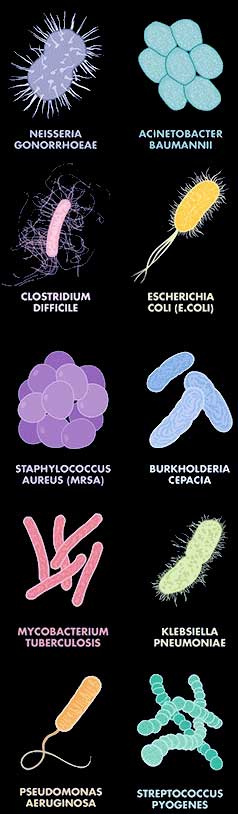
If you are an “Intelligent Design” proponent who accepts the earth is ancient, then you must also accept that the Designer used all his care, wisdom and power to design millions of creatures that arose at precise times over periods of hundreds of millions of years. But He didnʼt use that same care and wisdom and power to spare his little darlings from falling asteroids, glaciations, volcanic eruptions, earthquakes, droughts, floods, storms, viruses, bacteria, parasites, and the fangs and claws of their fellows. In fact, the Designer utterly destroyed species after species in five great extinctions, not to mention many lesser extinctions that mark the end of nearly every period in the geologic record. Also, as Malthus and Darwin pointed out, some animals lay tens of thousands of eggs and some plants produce tens of thousands of seeds. Relatively few survive. They are born only to die.

Nor did this Designer get things right the first time. He has had to keep tinkering with creatures over periods of millions of years. He tinkered with reptiles in order to produce synapsids, “mammal-like” reptiles with double jaw joints; then tinkered with those synapsids to produce true mammals by shrinking the second jaw joint until it became an inner ear bone. Such a transition can be traced in the fossil record.

He also tinkered with feathered dinosaurs until he had a few that could fly, but not very well, since the earliest ones all retained reptilian features that hindered their ability to fly, like the lack of a large keel bone to anchor large flying muscles. They also had teeth and long bony tails. So early flying reptiles were heavier, making it more difficult to fly. Their skulls were still triangular and thick like in reptiles, instead of smooth, light and helmet-shaped like modern birds. Their long bony tails added drag, and their wrist bones were not fused, which limited maneuverability and steadiness in flight. So, the Designer tinkered with the first feathered fliers every few million years, until he designed better ones. No evidence here that such a Designer was perfect or could get it right the first time. Again, why did the Designer have to tinker with monkeys for millions of years, then tinker with larger brained primates for millions more, before producing “man?”

Iʼd say the “Intelligent Design hypothesis” should be renamed, the “Tinkerer hypothesis.” For all we know this Tinkerer may have even fiddled with creating more than one cosmos which was incapable of sustaining life before discovering the right “cosmological constants” that could produce a cosmos capable of sustaining life as precariously as ourʼs does. Of course the hypothesis that “cosmological constants were tinkered with before our cosmos was born” is impossible for us to verify or deny. But the “Tinkerer hypothesis” seems to fit what we do know about the cosmos and life on earth after the Big Bang, and for that reason, it has more to recommend it than the “Design hypothesis.” [B. and Kenneth E. Nahigian]

Suppose that upon some island we should find a man a million years of age, and suppose we found him living in an elegant mansion, and he should inform us that he lived in that house for five hundred thousand years before he thought of putting on a roof, and that he but recently invented windows and doors; would we say that from the beginning he had been an infinitely accomplished and scientific architect? [Robert Ingersoll]

Some ID-ers believe in a Designer who instantaneously created different plants and animals and plopped them down at different points in geologic time. This means that a vast multitude of animals and plants were created only to suffer pain and death over periods of millions of years and then have their species become extinct. “Designing” creatures for pain, suffering and extinction, and then having to “design” some more for that same “purpose,” was repeated again and again, all before man arrived on the scene.

At least in an evolutionary scheme, no animal or plant arises just for the “purpose” of going extinct, but so that it may play a part in the ever branching struggle to occupy new niches and continue the evolution of life on earth. Thus, evolution allows theists to make more sense out of millions of years of animal life, death and extinction, than the “Intelligent Design hypothesis” does. - B.

“How do you explain the beauty and harmony of nature?”

Answer: “Throughout the animal kingdom, animals prey upon each other or die of hunger (or nature kills them in a myriad other ways). For my part, I am unable to see any great beauty or harmony in the tapeworm. Let it not be said that this creature is sent as a punishment for our sins, for it is more prevalent among animals than among humans. I suppose the questioner is thinking of such things as the beauty of the starry heavens. But one should remember that stars every now and again explode…” [Bertrand Russell, “What Is an Agnostic?”]

How can one speak about the “mercy and goodness” of a nature in which so many animals devour animals, where so many mouths are slaughter-houses and stomachs are tombs? “Observe,” said the minister to his son, “the beneficent design with which the crane is fashioned - legs, bill, and feet - to catch fish with ease and be fed.” “Yes,” replied the boy, “I think I see the beneficence of God, at least so far as the crane is concerned, but donʼt you think the arrangement a little hard on the fish?” [E. M. Mcdonald, Design Argument Fallacies]

A butcher-bird impaling its victim on a thorn, or a lion killing a gazelle, or a cat biting a mouse, or a tick feeding on the eye of a fowl, or an intestinal worm eating in the entrails of a priest are all part of the “divine plan” which theists say exists. [Woolsey Teller]

Can we find “design” in the fact that even in every drop of every sea is a battlefield in which the strong devours the weak? [Robert Ingersoll]

People who believe in “intelligent design” point us to the sunshine, to flowers, to the April rain, and to all there is of beauty and of use in the world. Did it ever occur to them that a cancer is as beautiful in its development as is the reddest rose? That what they are pleased to call the adaptation of means to ends, is as apparent in the cancer as in the April rain? By what ingenious methods the blood is poisoned so that the cancer shall have food! By what wonderful contrivances the entire system of man is made to pay tribute to this divine and charming cancer! What beautiful colors it presents! Seen through a microscope it is a miracle of order and beauty. All the ingenuity of man cannot stop its growth. Think of the amount of thought it must have required to invent a way by which the life of one man might be given to produce one cancer. Is it possible to look upon it and doubt that there is a design in the universe, and that the inventor of this wonderful cancer must be infinitely powerful, ingenious and good? [Robert Ingersoll]

The cosmos is a gigantic fly-wheel making 10,000 revolutions a minute. Man is a sick fly taking a dizzy ride on it. Religion is the theory that the wheel was designed and set spinning to give him the ride. [H. L. Mencken]

We are all naturally like that madman at Athens, who fancied that all the ships were his that came into the Port of Pyraeus. Nor is our folly less extravagant. We believe all things in nature have been designed for our use. Ask any theologian why there is such a prodigious number of stars when a far lesser number would perform the service they do us, and he answers coldly, “They were made to please our sight.”
[Bernard de Fontenelle, A Plurality of Worlds, published in 1686]

Was the Universe Made for Man or Flea?

Until the 1800s almost everyone had fleas and lice. In the 1600s it was considered bad manners to take lice, fleas or other vermin from your body and crack them between your fingernails in company.
[Tim Woods and Ian Dicks, What They Donʼt Teach You About History]

Obviously only a Designer would have had the infinite wisdom and compassion to create “the flea” - a tiny insect with a thin body for moving easily through hair, and with immensely powerful legs for leaping many times their body length onto passing prey; and with the added ability to not just harry and bite, but to spread infections, including plague germs which killed tens of millions of people in Europe and Asia in a few short years. [B.]

My dear fleas, you are the cherished work of God; and this entire universe has been made for you. God created man only to serve as your food, the sun only to light your way, the stars only to please your sight, etc.
[Voltaire, “Sermon Preached Before Fleas”]

Can anyone really think itʼs all there just for us? A goldfish in a bowl has as much right to imagine the galaxy was built for it. [Kenneth E. Nahigian]
It took billion of years to prepare the cosmos and billions more to prepare the earth for man, impatient as the Creator doubtless was to see him and admire him. Civilized man has been here maybe less than 32,000 years. If the Eiffel Tower were now representing the worldʼs age, the skin of the paint on the pinnacle-knob at its summit would represent manʼs share of that age; and anybody would perceive that that skin was what the tower was built for.
[Mark Twain, “Was the World Made For Man?”]

Are we really so splendid as to justify such a long prologue? The philosophers lay stress on values: they say that we think certain things good, and that since these things are good, we must be very good to think them so. But this is a circular argument. A being with other values might think ours so atrocious as to be proof that we were inspired by Satan. Is there not something a trifle absurd in the spectacle of human beings holding a mirror before themselves, and thinking what they behold so excellent as to prove that a Cosmic Purpose must have been aiming at it all along? Why, in any case, this glorification of Man? How about lions and tigers? They destroy fewer animal or human lives than we do, and they are much more beautiful than we are. How about ants? They manage the Corporate State much better than any Fascist. Would not a world of nightingales and larks and deer be better than our human world of cruelty and injustice and war? The believers in Cosmic Purpose make much of our supposed intelligence but their writings make one doubt it. If I were granted omnipotence, and millions of years to experiment in, I should not think Man much to boast of as the final result of all my efforts.
[Bertrand Russell, “Cosmic Purpose” in Religion and Science]

Weʼre just a virus with shoes.
[comedian Bill Hicks, CD, Rant in E-Minor]

Thereʼs these Christian fundamentalists, the ones who are trying to get creationism taught in school as a science. I think it would be great because it would definitely be the shortest class of the day. “Welcome to creationist science. In the beginning God created the heavens and the earth. On the seventh day he rested. See ya at the final!” - Bill Hicks (comedian)

I believe in equal time for creation science. But since creation only took six days and evolution took billions of years, the equivalent time spent teaching creationism should be six seconds for every twelve years of evolutionary science.
- Skip Church, _The Damned Say the Damndest Things_

ftom24: when God created all was Good and right, no collisions, no death, none of what we see today…but thatʼs a subject for another board….

Edward Babinski: Well, if youʼre going to ignore modern geology and respond to what I wrote with a totally unevidenced theological defence that the world was originally “perfect” with “no death, none of what we see today,” then canʼt I respond with some simple questions of my own?

Mosquitoes In Paradise?

It doesnʼt matter to me whether Adam and Eve were created with or without bellybuttons.” I want to know, were they created with or without anuses? Did they fart? Did they defecate? Did their feces stink? How about their armpits? Did God feel the least bit obliged to give Adam and Eve the recipe for soap? In other words, wouldnʼt Adam and Eve have been “ashamed” of any number of things long before they were “ashamed” to discover they were “naked?”
Or, as Adam once put it, “Eve, pick some of those soft leaves next time, Iʼm getting chaffed!”
- Skip Church

Some creationists insist that the original creation was so perfect there was “no decay.” No decay my ass! Or should I say, “Adamʼs ass?”
- Skip Church

There was also pain in paradise. How do I know? It says in Genesis that God “cursed woman” by “increasing or multiplying” her pain in childbirth, and you canʼt “increase or multiply” what isnʼt already there.
- Skip Church

He made a man and a woman and placed them in a pleasant garden, along with the other creatures. They all lived together there in harmony and contentment and blooming youth for some time; then trouble came. God had warned the man and the woman that they must not eat of the fruit of a certain tree. And he added a most strange remark: he said that if they ate of it they should surely die. Strange, for the reason that inasmuch as they had never seen a sample of death they could not possibly know what he meant. Nor would he or any other god have been able to make those ignorant children understand what was meant, without furnishing a sample. The mere word could have no meaning for them, any more than it would have for an infant of days.
- Mark Twain, Letters from the Earth

(Scene: Garden of Eden. Afternoon. A glade in which lies a fawn all awry. Adam is staring in consternation at the fawn. Eve arrives and notices the animal.)
Eve: What is the matter with its eyes?
Adam: It is not only its eyes. Look. (He kicks it.)
Eve: Oh donʼt! Why doesnʼt it wake?
Adam: I donʼt know. It is not asleep.
Eve: Not asleep?
Adam: Try.
Eve: (Trying to shake it and roll it over) It is stiff and cold.
Adam: Nothing will wake it.
Eve: It has a queer smell. Did you find it like that?
Adam: No. It was playing about; and it tripped and went head over heels. It never stirred again. Itʼs neck is wrong. (He stoops to lift the neck and show her)
Eve: Donʼt touch it. Come away from it… Adam, suppose you were to trip and fall, would you become like that?
Adam: (He shudders)
Eve: You must be careful. Promise me you will be careful.
Adam: What is the good of being careful? We have to live here for ever. Think of what for ever means! Sooner or later I shall trip and fall. It may be tomorrow; it may be after as many days as there are leaves in the garden and grains of sand by the river. No matter: some days I shall forget and stumble.
Eve: I too.
- George Bernard Shaw, Back to Methuselah

How can some Bible believers state with a straight face that there was “no animal death before the fall of man?” Was the movement of every creature in Eden finely choreographed? Monkeys swinging wildly from tree to tree, but never crushing an insect on a branch or upsetting an egg in a nest? Brontosauruses dodging ants, worms and small mammals with each gargantuan step? Iʼd love to see a ballet like that on the Arts and Entertainment network!
- Skip Church

Excerpts from “The Diary of Adam and Eve”

(A PARODY)
Friday: She [Eve] engages herself in many foolish things: among others, trying to study why the animals called lions and tigers live on grass and flowers, when, as she says, the sort of teeth they wear would indicate that they were intended to eat each other. This is foolish, because to do that would be to kill each other, and that would introduce what, as I understand it, is called “death”; and death, as I have been told, has not yet entered the Garden.
Thursday: She is in much trouble about the buzzard; says grass does not agree with it; is afraid she canʼt raise it; thinks it was intended to live on decayed flesh. The buzzard must get along the best it can with what is provided. We cannot overturn the whole scheme to accommodate the buzzard.
Friday: She says the snake advises her to try the fruit of that tree, and says the result will be a great and fine and noble education. I told her there would be another result, too - it would introduce death into the world. That was a mistake - it had been better to keep the remark to myself; it only gave her an idea - she could save the sick buzzard, and furnish meat to the despondent lions and tigers. I advised her to keep away from the tree. She said she wouldnʼt. I foresee trouble. Will emigrate.
- Mark Twain

Ah, fair Eden of creationist lore, where sharks spit out tiny fish they accidentally swallowed after taking a large bite of seaweed. And where spiders assisted in the release of insects that accidentally flew into their webs.
- Skip Church

Thereʼs these Christian fundamentalists, the ones who are trying to get creationism taught in school as a science. I think it would be great because it would definitely be the shortest class of the day. “Welcome to creationist science. In the beginning God created the heavens and the earth. On the seventh day he rested. See ya at the final!”
- Bill Hicks (comedian)

I believe in equal time for creation science. But since creation only took six days and evolution took billions of years, the equivalent time spent teaching creationism should be six seconds for every twelve years of evolutionary science.
- Skip Church, _The Damned Say the Damndest Things_

DNAunion: The author obviously does not know the differences between ID and Creationism. I know the differences. I was hoping to address both at once by use of the phrase, “arose at discrete times.” I carefully avoided saying exactly HOW they would arise. This becomes clearer the more one reads the posted material - direct references to Adam and Eve, no death before “The Fall”, God of the Bible, the Bible itself, Christian Fundamentalists, teaching Creationism in school, etc. The authors are obviously addressing Creationism specifically in almost every instance, yet they claim to be discussing ID.

Edward Babinski: ID in its ideal form has nothing to do with those things, but the majority of folks who make up the ID movement are self-proclaimed “Bible believers” including the major editors and contributors to Origins and Design like Dembski (a creationist, old or young I am not sure), Paul Nelson (young-earth creationist), Philip Johnson (creationist). In fact, my first response on this board was from an IDer who told me flat out that he believed in a “perfect” creation with “no death” in a way that young-earth creationists espouse.

Best, Ed

Mike: It is clear that Ed confuses ID with a metaphysical notion about the way things ought to be. That is, he seems to be assuming that if ID was true, the designer would not only be designing every aspect of reality, but would be doing so such that Paradise (the Best of All Possible Worlds) would be designed.

Edward Babinski: The _extent_ of massive extinctions and animal suffering and pain over geologic time with creatures being evolved/created merely to become extinct, long before man even arrives on the scene was what I was pointing out. You apparently “got” that point and seem willing to agree to some extent that this is NOT the “best of all possible worlds” that an infinitely good and infinitely wise creator is capable of designing.

The truth of ID (or the teleological viewpoint) does not entail the non-existence of earthquakes and fangs.

Edward Babinski: I wasnʼt disagreeing, I was merely pointing out that the world could also be explained as the product of a divine tinkerer rather than an infinitely wise and infinitely loving designer. You seem to be agreeing with me that that is a possibility.

Ed relies completely on subjective impressions to argue that this is an example of “not getting it right.” An intelligent designer may very well have designed gradually.

Edward Babinski: “Gradually,” yes. “Less than optimally” was what I was pointing out. The earliest birds are not nearly as well designed for flight as later examples. And Iʼm sure that double jaw joint in reptiles was less than optimal, and proved a bit of a problem for that animal until the second jaw joint got incorporated as ear bones. Again, the notion of a tinkerer comes to mind.

That is, by carefully choosing a stem population best poised to accept such modifications, one could use guided interventions to carefully tease out and exploit the potential of any organism and then strategically guide its evolution to a targeted end-state.

Edward Babinski: “Carefully teased out?” I guess the author does not accept that God “rested” on the seventh day of creation, but instead is still carefully teasing out creation. Well there goes Genesis. Also, weʼve gone from a God who “commands, and it is done,” to a God who is “carefully teasing things out.” Nor is this Designer capable of having water bring forth birds and fish directly, and having the earth bring forth animals directly as it says in Genesis. Instead, creatures are “carefully teased out” of one another. And what if God isnʼt “careful enough?” What if He misses a “tease” or two? What results then? The ID explanation leaves a lot to be desired when viewed in a biblical theological vein, not to mention the fact that the “Designer” has made it so that the cosmos sends asteroids to destroy His “carefully teased out” creatures. Whereʼs the “care” in that?

While Ed might assume that such evolution was a consequence of random mutations and natural selection,

Edward Babinski: I did not highlight “random mutations and natural selection” in my piece. In fact, I made it clear that I was arguing for an ID explanation that appeared as rational and logical as any other ID explanation, namely, A Divine Tinkerer. Itʼs obvious that the IDers who have responded to my piece thus far have not understood what I originally wrote, but instead concluded that I was misunderstanding THEM. Baloney. I know ID and the I know the difference bewteen ID and creationism. But they donʼt know when someone like me is suggesting a less than grandiose version of ID, a “Divine Tinkerer.”

The third problem is that Ed ignores the many examples where, even according to his standards, things were gotten right from the beginning. The genetic code itself makes for a very good example that was gotten right.

Edward Babinski: Yeah, the genetic code, the human genome, 99% of which is heavily mutated junk with no on-off codons. Why not study and discuss shared homologous pseudogenes, and also shared homologous retro-viral sequences in both man and the nearest living species to man — with whom we share a lot of the same junk. I guess the Designer designed all that junk for a reason. Or maybe just maybe DNA isnʼt exactly an optimal “design.”

Also see the chapter on pseudogenes and genetic junk in the new book, Genome : The Autobiography of a Species in 23 Chapters — Matt Ridley

Or what about the eukaryotic cell cycle? Cell cycle genes from humans can replace those in yeast, indicating that billions of years of evolution have not “improved” these genes in either lineage. Better yet, consider ubiquiton. Here is a 76-amino acid protein that plays an essential role in regulated protein degradation. When one compares the amino acid sequence of this protein from various protozoans and yeast with those of mammals, there are only three differences and all involve conserved substitutions. Yet among bacteria, Ub does not even exist. Thus, here is an another example where something was gotten right in the beginning and has not since been improved by billions of years of evolution. If Ed wants to use examples of change as examples against ID,

Edward Babinski: My piece wasnʼt an argument against ID, but simply argued for the possibility of a less than impressive Designer, a “Divine Tinkerer.” Nor can the fact that a few genes are found in nearly exactly the same form throughout much of the animal kingdom (and have to retain their exact sequences in order to work effectively), be used as an argument against evolution by either design or natural selection.

There is no reason to respond to the rest of Edʼs posting. IMO, it amounts to little more than spam which seeks to smuggle in theological/metaphysical arguments in place of the level-headed analysis that is needed to determine if certain biological features more likely owe their origin to intelligent design or a blind watchmaker.

Edward Babinski: It is ID that is attempting to “smuggle” into the scientific enterprise miraculous explanations in place of step by step progress in knowledge that has to be sought diligently and “carefully coaxed” out of nature after much time and experimentation. ID will no doubt continue to attract amateur theologians (like Dembski) and feed the theological sense of awe, i.e., of instantaneous miracles so subtle they require an IDer to point them out to other people and point proudly at exactly which points in creation the Designer had to pull another rabbit out of His hat. IDerʼs also resemble people who want to just shake a box filled with jigsaw puzzle pieces and if they donʼt connect, give up. Or imagine that God has solved the puzzle already and knows where all the pieces go, so there is no need for _them_ to try and solve it as well. Itʼs enough that they remain awed by Godʼs accomplishment.

Meanwhile, the theory of evolution will continue to attract people with far more patience and curiosity, whose greatest passion is to fiddle with the jigsaw pieces of the cosmos, putting together the pieces to discover how the elements and their unique molecular bonding properties evolved out of simple hydrogen atoms fusing together (i.e., nucleogenesis inside stars), and how man evolved from billion-year-old carbon, one step at a time. Thatʼs the kind of “awe” that thrills a scientistʼs soul.

Best, Ed

Tom: My belief in supernatural creation (which in my belief means it was perfect before sin) shows that when sin became reality, then the world began to deteriorate into the state we have today.

Edward Babinski: Tom, Just tell me what you mean by “perfect.” Is the eating the hence the death of plants included in your definition of “perfection?” What about the deaths of any insects or very small multicellular animals attached to those plants which a large plant-eating animal might also ingest with each leaf or piece of fruit it bites into and eats? Or, like I suggested, a shark eating seaweed, and also swallowing small baby fish who were also eating the same seaweed. Thatʼs fish death. Also, speaking of death, if no animals died, but they produced as many offspring as they do today and all the offspring survived, then a single bacterium could envelope the earth with its offspring in something like a few days. A single oyster could envelope the earth with all its offspring and crowd all the water out of the oceans in less than a year. And what about death due to accidental drowning or falling accidents or tipping over the nests of other animals accidentally or stepping on animals accidentally? And of course, thereʼs the process of elimination of gas and solid waste in the colon which doesnʼt seem to be “perfection" to me.

And thereʼs also the death of cells in our own bodies, like skin and hair cells. Even the development of our brains requires an enormous amount of brain cells dying each day after we are born, in order for our brains to develop their own “individual and social reality networks,” whereas without such natural brain cell death, our sensations would probably be overloaded and our thoughts confused. So, “death” seems an inevitability in nature, indeed a necessity in so many ways, part of the warp and woof of the cosmos. Without hydrogen atoms “dying” to become fused into something new and different inside stars, and wasting a helluva lot of energy in the process (entropic energy waste) there wouldnʼt be elements galore, but just hydrogen atoms. What kind of world do possibly imagine could exist without the many “deaths” above? The Bible itself speaks of God “multiplying” Eveʼs pains during childbirth, and you canʼt “multiply” what isnʼt already there. So, there was “pain” in “Eden” too. And even Henry Morris had it out with Robert Kofahl, two young-earth creationists, who debated in The Creation Research Society Quarterly such topics as whether or not the 2nd law of thermo-d was in action prior to “the Fall.” Kofahl pointed out to Morris that without the 2nd law being in effect Adam could not have even digested the fruit he ate.

So, do you have the slightest idea what you are talking about when you speak of the world being “perfect” before “the Fall?” Nor does the Hebrew tale of the expulsion from Eden describe any more “curses” than the introduction of thorns and thistles, the curse of the snake to go on its belly (how it moved about before it was cursed to go on its belly, the story does not say), and the increase of womanʼs pain in childbirth. Doesnʼt sound like the whole of creation was changed radically, just a few discrete changes. Besides to change it radically would have meant recreating it as a whole, and God “rested” after the sixth day.

Your belief in the unspecified “perfection” of creation “prior to the Fall,” kind of reminds me of the way some creationists woo an audience with tales of how “BIG” things used to be on earth “before the Flood,” when the world was “more perfect,” like thirty-foot tall cattails and big dragonflies with huge wingspans and dinosaurs, etc. But I point out to such folks that some dinosaurs were also the size of chickens, and that the biggest plants and animals ever known are living today in our “less than perfect world,” animals like the Sequoia and the Blue Whale.

Lastly, what about fellow ID folks who disagree with your views concerning the “perfection” of creation, but who instead accept the vast age of the cosmos? I should think theyʼd raise many of the same questions I raised above, asking you to please just try to explain what you mean by “perfect.”

Best, Ed

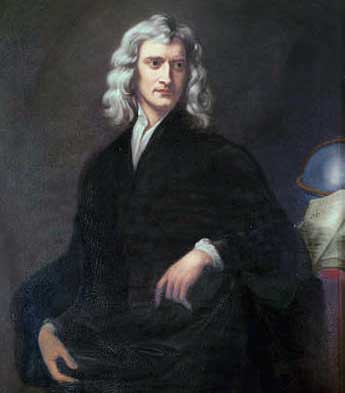
Intelligent Design (I.D.) and Isaac Newton

Isaac Newton and Intelligent Design

Isaac Newton wrote that he believed God occasionally intervened miraculously to set the planets right in their orbits, i.e., to correct cases of minor perturbations.

Apparently Newton was aware that sometimes two or more planets might be circling the sun and pass relatively near each other, influencing each other gravitationally, pulling each otherʼs 3-D orbits out of whack slightly, and that could add up over time. So Newton pictured God as intervening from time to time to keep his perfect celestial clock running smoothly, correcting such minor perturbations.

Today, astronomers no longer invoke “God” to restore orbital perturbations. Neither do they invoke “God” to explain how all the elements continue to rise out of fusing simple hydrogen atoms (a reaction that occurs inside stars via fusion, with the heaviest elements being created during novas).

In fact, todayʼs astronomers speak in terms of a messy astronomical past filled with orbital perturbations, and also speak in terms of a treacherous future filled with bleak possibilities for our planet and/or solar system:

Articles from New Scientist

“Birth of the planets: The Earth and its fellow planets may be survivors from a time when planets ricocheted around the Sun like ball bearings on a pinball table” 24 August 1991 issue 1783

“Jupiter drifted towards sun in its youth” The giant planet drifted tens of millions of kilometers towards the sun in its youth, a new study suggests, perhaps even helping to form the Earth. 26 September 2004

“Wandering Jupiter took trek towards the sun” 25 September 2004

“Planet formation is violent, slow and messy” A new view of planet formation is revealed by observations of nearby stars - it suggests Earth-like planets might be common. 19 October 2004

“Did a planetary wobble kill the dinosaurs?”… A wobble in Mercuryʼs orbit could have wiped out the dinosaurs…to see when the next potentially catastrophic planetary wobble will be…

“New moons suggest brutal beginnings” Five new moons circling Neptune, and two tiny moons newly discovered around Saturn hint at violent pasts 18 August 2004

Or a nearby star could go nova, or simply pass near our sun. Also, thereʼs the fact that hundreds of asteroids cross the earthʼs orbital path each year.

So we live with far more uncertainty than Newton did. Even our genes apparently have undergone loads of perturbations due to mutation-facilitating ALU sequences, according to this weekʼs news. (“Scientists track ‘stealth’ DNA elements in primate evolution” 02 May 2005)

Not to mention living with the knowledge of other kinds of perturbations, like several major (and many minor) periods of extinction in the past.

Not to mention the fact that a third to a half of all fertilized human eggs simply donʼt survive. Even of those humans who get to emerge living from the womb, half of them used to die by age seven (according to Buffon, writing 200+ years ago).

In nature some species lay several thousand eggs, that vast majority of which donʼt survive. Plant seeds face a similar rate of death. Some bacteria divide so fast that they could fill the oceans and land in a few days, but their death rate is likewise enormous.

My observation is simply that given all we know, above, natural selection is an obvious hypothesis. Each organism is tested by nature beginning with pre- fertilization “sperm wars,” then during the zygote and early embryogenesis stages when a third to a half of them all donʼt survive, and thereʼs the missing twin syndrome later on in pregnancy, a quite common failing, such that perhaps 30% of all single births were once twins in the womb, and then after birth during childhood more testing from mother nature takes place with a large childhood mortality rate (which if you survive that test, your odds of surviving to old age are greatly enhanced), all the way up to adolescence when human beings begin another breeding cycle, and then social and sexual selection plays a further testing role. Such a rigorous testing plan occurs throughout nature for every individual of every species. Thatʼs how natureʼs perturbations are dealt with—not by “god” stepping in miraculously to “correct” things. If that is not “selection” of some sort then what is it?

And if this process selects out the deleterious mutations, then doesnʼt that also mean that it also “selects-in” the beneficial mutations that make a healthy life and sexual reproduction more likely next time? (Just think of it this way—When a Christian sport-person crosses themselves and prays silently that their side “scores a touchdown,” or “makes a basket,” or “gets a hit” and “wins,” then arenʼt they also praying that the other side loses? Such things work both ways.)

Just a thought.